Teaspoon
Spend time around religious spaces, and you get the sense there are two ways communities tend to respond to people who they see as “outsiders.” Recently it’s been LGBTQ+ people, but other outsider groups might include people of colour, people with disabilities, children, or the unhoused. Some communities reject outsiders, responding with hostility, while others welcome, responding with tolerance and openness. As a young person, I was taught to be tolerant, but these days, I dislike this framing. Because we can be more than tolerant.
In reality, how a community responds to outsiders or newcomers is a spectrum: on the one end, there is hostility and rejection, and around the centre we have our position of ‘tolerance.’ What actually sits in opposition to rejection is affirmation, the enthusiastic welcome and celebration of the person. It isn’t my dream to see a world which is just tolerant of others, I want one that affirms and celebrates the goodness and virtue we all have. This might sound pedantic, but truthfully I think it makes a big difference, because what it reflects is a matter of power: how it’s wielded, and who gets to use it. Think on a gathering of friends, at a party: would you say you actively enjoy and look forward to the company of a friend who you find ‘tolerable’? If I had to give a compliment and said I tolerated someone, would you think I like them? Do I respect them?
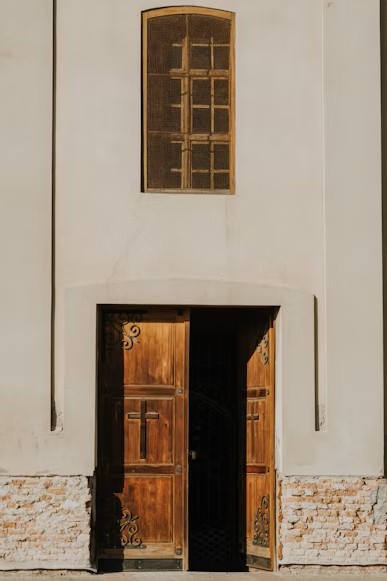
Christians should do more than just keep their doors open. Source: Drazen Nesic, Unsplash.
‘Tolerance’ feels so onerous, something for which the other person should be grateful: just remember, the other people hate you. Don’t forget how good you have it here. Tolerance doesn’t imply good-will, or acceptance, or a softening of the heart. I tolerate things I don’t really like, but have to put up with anyway, like a dentist appointment or waiting in traffic. Compared to outright hostility and violence, tolerance sounds great. But as an endpoint, a goal, tolerance incomplete. Many of us who want a more tolerant world don’t just want that; we want a more just world, a world that is equitable and fair and kind and loving and forgiving and merciful – That is the world we’re excited for, one which tolerance is a condition for but doesn’t create alone.
The underlying problem with tolerance extends out beyond the walls of a church, however. It speaks into a larger discomfort in how progressives, as a movement of many disparate groups with somewhat aligned goals, deal with one another. The trouble with tolerance is that it doesn’t change anything. The tolerant church might let gay people in the congregation, but that alone isn’t going to change how Christianity treats gay people. Churches that put queer people in positions of authority, those groups are working to change the wider culture. But that’s only because they’ve moved beyond tolerating someone into enthusiastically inviting them, affirming not just their right to exist in the space but to genuinely contribute towards it and to shape it.

Gardens need every flower to flourish and shine. Source: the author.
So, what is the problem for progressives? We, by and large, are quite tolerant people. Compared to the hostility and cruelty of many modern conservative movements, we’re agreeable and more than willing to have those different to us around. But we should ask, really ask: does it go any further than that? This question must reach most of all to those of us in progressive spaces who are white, who are men, who were raised in the comforts of wealthy, well-armed nations. Tolerance is pretty easy to do because it doesn’t involve the ceding power, giving up the floor to anyone else. We have passed the low, low bar of not being actively hostile – is that enough? Are we being changed by the outsiders and newcomers, letting them hold the floor?
When you look at any movement or community and want to see where the power is, ask yourself this: who gets to set the agenda? Who decides what is and isn’t something to take seriously? Who learns from who, and is shaped by who?
It is much easier to say you reject the systems of power that put you, as someone with privilege and power, in a place of respectability, than it is to actually reject this idea. History is littered with privileged people who, beneath slogans and buzzwords, didn’t internalise that the world was not about them, that they didn’t in fact have a special insight into the inner workings of the world that everyone else needed to listen to. People who could tolerate others being different, but couldn’t become different themselves.
Is tolerance enough? Not really, not in the end. I don’t want a world where we simply tolerate each other. I want a world of exchange and affirmation, where we actively learn from each other, allow ourselves to be changed by encounters and experiences. Where there’s no underlying assumption that the Western Way is always best, in which we don’t presume that there’s no gifts another can bring to us. If the best we can do is tolerance, then even if we win, we’re likely to just make a new Empire. Frankly, I think we can aim higher.

 The Teaspoon Brigade
Leave a comment