Have you ever wondered why are conservatives so obsessed with culture and the ‘culture war’? Honestly, there’s no one answer to this question, but something I want to speak to is the determination of conservatives (and the far right) to normalise themselves. By the end of the 1940s, the far right was in retreat. Several fascist and conservative regimes were toppled and disgraced. So heavily were terms like eugenics or fascism buried in the abyss that the far right all but stopped using them, at least overtly. But over the last eighty years, these ideas have crept back into relevancy. Where that inflection begins is up for debate, but what matters most is not the when or why, but the how. A core component of the resurgence of the far right is normalisation of beliefs, conservatives staking their claim in culture. It is a strategy we have often failed to combat.
The trouble for reactionaries, that collections of conservatives and far-right extremists, is that they struggle to make good art. They can’t easily contribute to or generate culture. When you are on the side of power and violence, aligned against democracy and human expression, what art can you make? There’s a reason Star Wars is not about the glorious victory of the Empire over the Rebellion, or Lord of the Rings about Sauron’s defeat of the multi-racial coalition of Free Peoples (more on that one later). Prejudice, exploitation, and subjugation do not make for compelling stories. So, the reactionary is in a rut: the best way to become normal and visible is to be present in culture, but they can’t generate it. What do they do to solve this problem? Like a thief, they clamp onto our culture and try to steal it away from us, to make it represent them instead. Unfortunately, it works well, and it’s helped integrate them into public life over the past few decades.
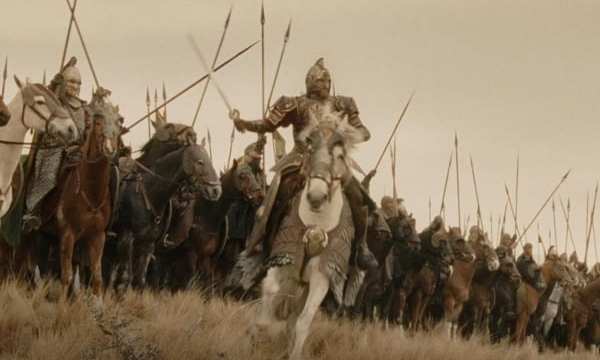
Who do the evil Orcs and Noble Rohirrim represent? Should we let that decision be made for us? Source: Mark Butler, https://inews.co.uk/culture/film/ride-of-the-rohirrim-lord-of-the-rings-return-of-the-king-theoden-rohan-216827?srsltid=AfmBOooFUJAF6LotOPTs3JgVczu80yynRUB8ooznSHIJVgM3nzgAalAE.
Don’t be mistaken, the right knows we don’t like to share spaces with them. They’re counting on it. They attach themselves to fandoms, artists, and media, even ones that make fun or demonise them, because they understand that if they hand around long enough, there’s a good chance we’ll pack up and leave. There are good reasons to boycott or disavow, but sometimes in doing so we leave art and culture vacant – we disavow, and then they move in and claim it for themselves. When only one side of a political discourse is overly worried about principles, that side will see their lines pushed backward. Ironically, the far right isn’t worried about purity here; they fully expect to purge those they cannot tolerate once they have their power. They will use art to normalise and justify their worldview, fully expecting to ban and burn it later. Progressive principles and an aversion to compromise ensures that what we claim and stake for ourselves in culture is growing ever smaller. More and more culture and art comes to represent a reactionary worldview.
Remember, the far right craves legitimacy, and the power that comes from being normal. They want to be seen as ordinary and respectable, so they can claw their way back into politics proper. More than that, they want to be seen as heroes and champions. The narrative of fascism places the far right as legendary noble characters saving the world. This creates something of a collision course, because a huge amount of the cultural work the far right find themselves drawn to was not made for them and was not made about them. It was the art of progressives, about our struggle against them. And they start to claim it, because they know if they do it enough, we will leave it for them.
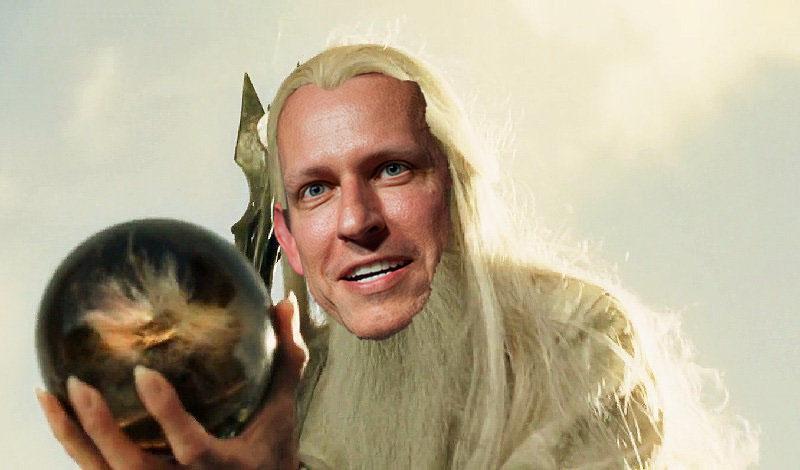
We should resist the urge to give up on art, just because people like these guys like it – even if they insist on making it uncomfortable for everyone else. Source: Michael del Castillo, https://www.bizjournals.com/bizjournals/news/2015/04/16/peter-thiel-has-founded-at-least-five-lord-of-the.html.
But this process isn’t inevitable, and it’s something we can resist. Let’s talk about Lord of the Rings. Reactionaries are desperate to convince us the work of Tolkien was made for them. Peter Thiel named his surveillance company Palantir, inspired by the seeing stones used by characters in Lord of the Rings. JD Vance named his venture capital firm Narya, after one of the Elven rings of power. The Weapons company Anduril, whose co-founder is a backer of Trump, is named for the sword wielded by Aragon. Thiel also has a venture fund, named Mithril after the precious metal the dwarves mined at their city of Khazad-Dum. If this sounds nerdy, that’s because it is. But it highlights how much reactionaries want to associate Tolkien with them, and want it to belong to them. Obviously, we can critique or comment on Lord of the Rings. It has plenty of flaws. But we should affirm that the reasons for reading Lord of the Rings as conservative are broadly shallow, fragile, and sometimes incoherent. Reactionaries take the most surface of readings of the text: they see a fantasy world and connect it to their desire for “the old days.” They see white heroes fighting monsters and put themselves in the shoes of the warrior-men. They see a story mostly featuring men and take it as endorsement of traditional gender roles. In doing so, conservatism rips the heart and soul out of Tolkien’s work, reducing it to nothing more than another weapon in a culture war. Almost nothing is said of characters, of themes, of tone.
This is a reading of Tolkien without Frodo and Sam, without the fall of Saruman, one that barely acknowledges why Mordor was opposed in the first place. Conservative and far right readings of The Lord of the Rings suck. Progressives can do more with it, and that alone might be enough to claim it back. We should bear in mind that the far right comes for our work and art, because its good and it makes them look bad. That’s why they need to rewrite it as the main characters. Because if they can’t pose as the heroes, then we might all notice that they’re the villains. You know what Lord of the Rings is also about? It’s a story of a multi-racial alliance coming together to resist and ultimately defeat an authoritarian ruler with extensive surveillance technology. More than once, the text refutes eugenics and promotes inter-racial relationships (Note Aragon-Arwen, Beren and Luthien). Unregulated industry is condemned and environmentalism celebrated: there’s a plot point where a group of living tree-men rise up and retaliate against the excess of industry. An evil warrior-king is murdered by a woman who defies traditional gender roles, and the real trauma of war and violence is explored in Frodo’s varied wounds. Why, WHY should these and other readings of Tolkien be less authentic and true than the reactionary version? Why should we cede space and ground to them, and let them control the narrative? Why should this art belong to them?
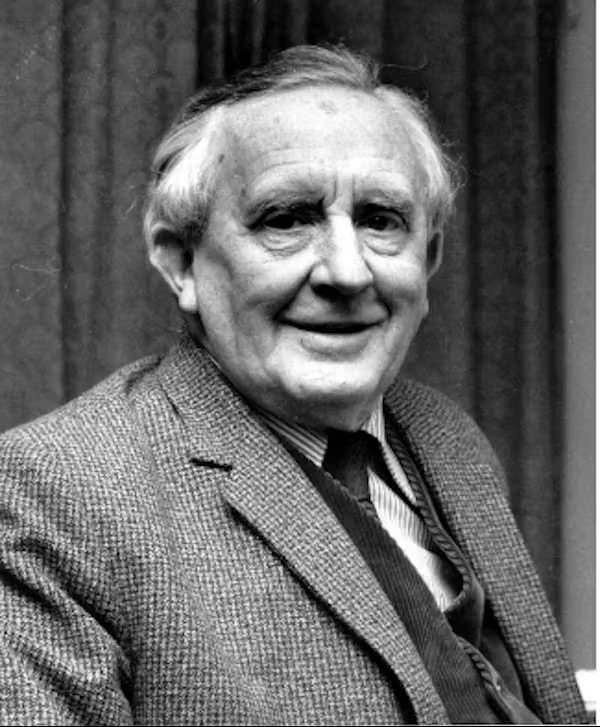
Tolkien had plenty of flaws, but he was no fan of the far-right and fascists, nor colonialism or apartheid for that matter. Source: Cornel Zuegler, https://theconversation.com/was-tolkien-really-racist-108227.
In reality, art belongs to no one and everyone. Nobody can claim something all for herself, and you cannot control who else will engage with what you make. Progressives have for decades been making satires and commentaries on the far right, only to watch it slowly become a tool of the very people it criticised. And why wouldn’t they glob onto it? If reactionaries can drive everyone else away, then the art can be safely seen as theirs; and if it belongs to them alone, it can’t embarrass or critique them. And if the art represents their worldview, that makes it just that little bit more normal, that tiny bit less unacceptable, and they crawl closer to power and control. Art belongs to everyone. This means the conservatives can take their shallow, surface readings of literature, film, and media. But it means we can have our deep, resonate readings too. Reactionaries don’t own Lord of the Rings, or any other piece of art. We can, and should, claim it for ourselves too.
– The Teaspoon
 The Teaspoon Brigade
Leave a comment