Do you remember Game of Thrones? For a while there, it was the biggest show around. The show that dominated discourse and attention, then all but vanished once it was over. It’s funny how that happens sometimes. Now, there’s only echoes of that popularity in references and throwaway jokes from other shows, which all feel a little unbelievable and absurd today. That show, more than anything else from its era, embodied the brooding, dark, cynical media that was being released in the 2010s. People used to call the show ‘realistic’ fantasy, and hype it up for being believable. But looking back, we were wrong to do that.
For any who didn’t watch the show or have forgotten it completely, Game of Thrones ran from 2011-2019, with eight seasons (they took a year off in 2018) and a sprawling interconnected narrative involving dozens of different characters, major wars and apocalyptic events. It was based on novels by author George R.R. Martin, and one of its biggest selling points was being ‘Lord of the Rings for Adults’ – a fantasy world that didn’t just have dragons and swords and heroes, but sex and murder and tax policy. This was a show that depicted all the horror and evil humanity had to offer, with brutal battle scenes and gory deaths, gruesome executions and human mutilation, prejudice and bigotry, incest and sexual violence all being put to the fore. Kind and just people were betrayed and slaughtered, while the unjust and cruel ruled and schemed with great success. It was huge in its time, not just popular but acclaimed with hundreds of awards including forty-seven Emmy wins. And throughout it all, it was lauded for being more ‘realistic’ and honest than other works (with, as suggested, a lot of comparison to Lord of the Rings). But to ask the obvious question: was it actually realistic? And what does it say about us that we happily asserted it was?
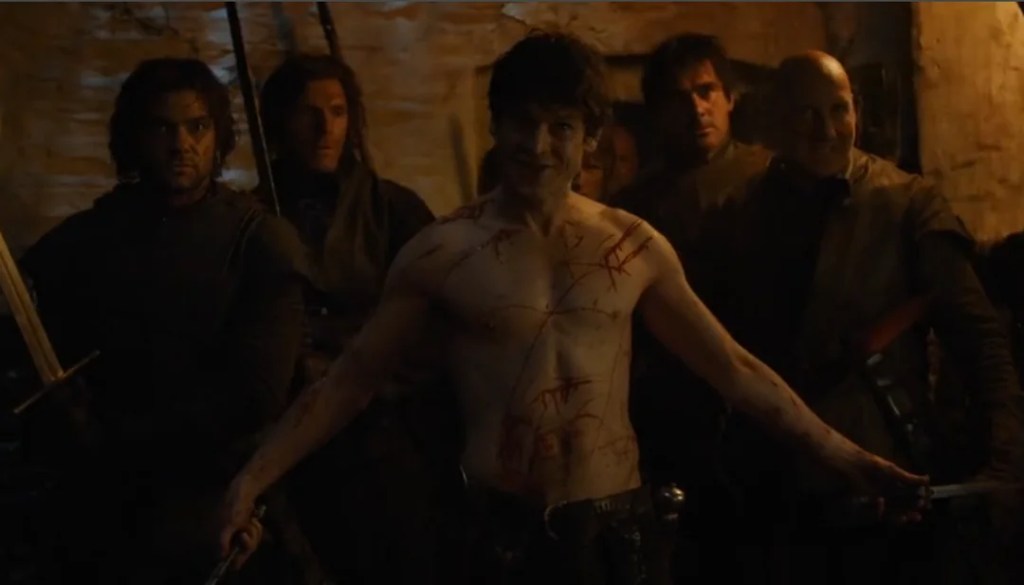
Three things to note; first, the shows ‘dark’ tone kept getting way too literal. Secondly, being a horrible murderer rarely won friendship or loyalty in the medieval period, where long-term trust was the bedrock of society – so it’s hard to believe Ramsay succeeding in real life. Thirdly, as a man fighting shirtless and bloody in a dog kennel, Ramsay Bolton not dying of an infected cut next episode somewhat cuts against claims to historical realism. Source.
To ask that question though, we have to work out what being ‘realistic’ means. The story (books and show) is set in a fantasy world, but a lot of the technology, culture, and society mirrors the late medieval period. So, is it realistic in its depiction of that period and world? In one way obviously not: it has dragons and monsters and all kinds of things we don’t accept as real. But that’s not what’s supposed to be real about Game of Thrones, right – the realism comes from its portrayal of the world and characters. The show is realistic in that it shows how people really behave and treat one another, how war and politics truly look, the sometimes boring and often ugly face of power and humanity. And the picture it paints is painfully cynical and pessimistic. Almost everyone who tries to do the right thing is punished, or turns out to be selfishly serving themselves. The vast majority of people are ignorant, stupid, and violent. Almost all religion and spirituality is just con artists and make-believe, and any real God or magic is dangerous and threatening. By the story’s end, the surviving characters are mostly traumatised and disillusioned, and while an apocalypse is averted and unjust rulers overthrown, very little changes for the better. Is that message authentic, and do we want it to be?
Firstly, is it a fair depiction of the period – not exactly. To be fair, I’m sure all the horrid events in Game of Thrones (and other cynical media of the time) are inspired by actual events of history, but take a step back with me. The show squeezes references to a collection of rulers, tyrants, murders, and atrocities from across millennia and continents into a story that takes place over maybe a five years, in one place. And that’s not including the aspects of the story based on myths that rarely if ever happened, the like the Lord’s right of First Night. One could tell another fantasy story in which prisoners are spared and released after battle (like at the Battle of Grunwald in 1410), where chivalry is upheld and celebrated (like Richard I and Saladin did several times), and in which women rule (like the cases of Elizabeth I of England or Eleanor of Aquitaine) – but would anyone call that ‘realistic?’ So maybe in one sense the show is authentic, but in another it’s more a pessimist’s narrative, one that skips over every story where kindness or mercy won, where tyranny was overthrown and where joy prevailed over despair. History is vast and sprawling, and you could shape almost any picture out of it by picking and choosing which events and figures to reference, but only some of those stories would be called ‘mature’ or ‘realistic’ – and those are probably going to be the cynical and violent ones. Why?
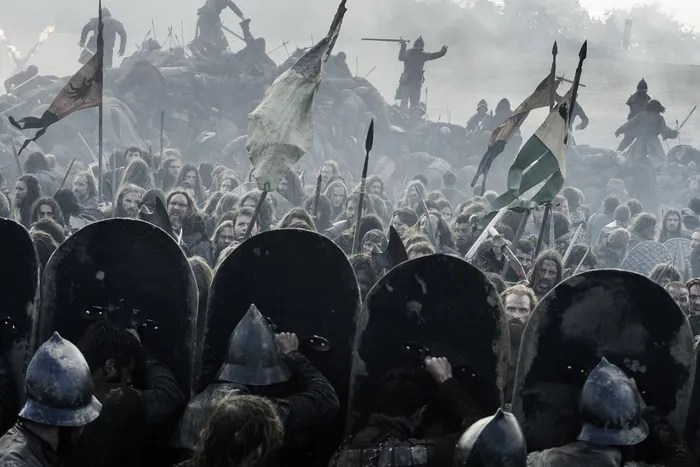
Remember; in the medieval period, big battles were rare since they were risky, pillaging was regularly limited since villages and peasants were the things being fought over, ransoming a noble or knight preferred to killing them, and death tolls lower than we imagine since the goal of a fight is to force a retreat, not kill every opposing soldier. Source.
Because the idea of Game of Thrones being ‘real’ and honest isn’t historical, but political and personal. It’s a statement of what we think people are like, what behaviours and systems are inevitable, and which are naive. Cynicism isn’t realism, it’s a philosophical and social viewpoint no more or less valid than any other. In elevating that show as more authentic, we tipped our collective hands on how pessimistic and disillusioned we all were, how hopeless we’d become in the face of exploitation and injustice. Or maybe for some, it was revealing that we ultimately didn’t believe in goodness; that most kind people are manipulators, and the ones who aren’t are stupid. Perhaps after the Cold War and US War on Terror, people were fatigued at the ‘good guys’ who promised to make the world better but were just as willing to be cruel. Maybe as we’ve stopped feeling represented by politicians and leaders, we also stopped buying the idea of good people in authority. Because Game of Thrones wasn’t the only piece of media to be heralded for its realism that also just so happened to be relentless cynical and pessimistic about humanity. Breaking Bad, True Detective, The Boys, The Handmaid’s Tale, The Wire, Deadwood, all of them claim some sense of realism and authenticity (some even being directly based off or inspired by real events), all of them are acclaimed and popular, and all of them link realism with violence, injustice, and brutality. Its not intentional, but its a huge amount of cultural and moral weight behind the idea that people are bad and good guys usually fail.
In the end, cynicism takes us nowhere. If we believe that everyone with power is or will be corrupt and abusive, what’s the point in even trying to change anything? Even if progressives changed the world order, we’d be just as bad as the people we beat. That’s not a recipe for success, it’s an excuse to surrender. I don’t want to accept a world where all the good people fail and the only ones who survive learn to be cruel. That’s honestly a shitty worldview which won’t help anyone, and there are people who are in need. These shows of the 2000s and 2010s reek of the comfortable privilege of a West who thought history was over and all the worst evils were in the past, but that instinct was wrong then and horrendous now. Too many people have shrugged their shoulders these past few years. The world is racked by war, genocide, authoritarianism, poverty, injustice, inequality, and legacies of colonialism and imperialism – this isn’t the time to give up, this is the time to do something. A common thought by fans of Game of Thrones was rooting for the apocalyptic army of the dead to just kill everyone and destroy it all. That sort of defeatist nihilism is all cynicism will take us to. And I don’t want that to be our future.
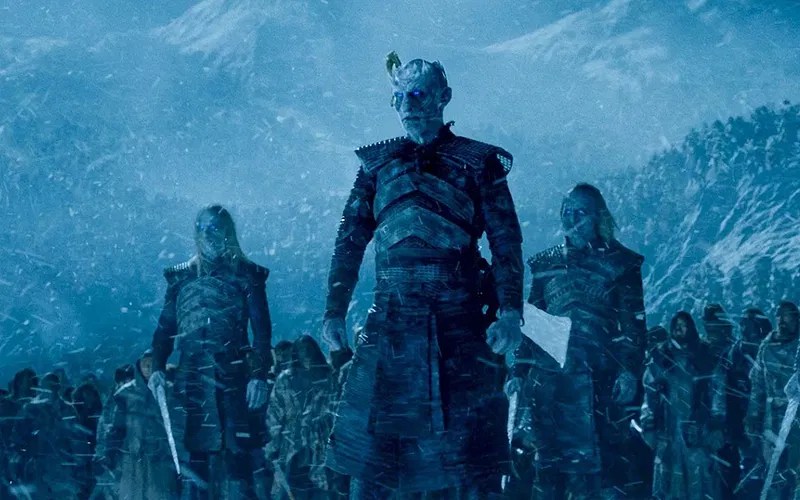
Media which makes you want to give up and root for the apocalypse is just that little bit frustrating during an unfolding ecological catastrophe which we could minimise or event prevent if we tried, but kept (and keep) avoiding committing ourselves towards. Source.
Maybe this is part of why Game of Thrones ended on such a whimper. The last season was bad to be sure, but frankly several prior seasons had the same writing and worldbuilding flaws, the same baffling changes from the books. It ended with a thud, but now seven years on I think it also just didn’t matter very much as a story. There was no moral, no message worth believing in and caring about, so once it was over and our collective interest on ‘how it ends’ was satisfied, we were all done with it. The punishment for caring about characters and plots doesn’t build a loyal fanbase who come back to your work to enjoy it again; cynicism doesn’t build anything worth having. Other gritty and dark shows have taken different approaches since then. Amazon’s adaption of The Boys, despite its violence and grim tone, changed a good deal of the material. The show repeatedly chooses more optimistic ends for character arcs: several people do, in the end, escape abuse and take their loved ones with them to safe obscurity. It also tones down the constant senseless violence – that sounds confusing considering The Boys, but the original comics got a fair bit darker, and not for much of a point. Even the latest work from the World of Martin, A Knight of the Seven Kingdoms, takes care to show a more kind and pleasant medieval world, as youtuber Jessie Gender pointed out in her video on the subject.
The things we accept as realistic are the things we treat as normal, as natural. When those things are injustice and sexual violence, abuse and mutilation, we will end up believing that there is no future for humanity – we side with the zombies and hope everyone gets killed. We don’t need more media that tells us the world is awful and people are evil, we need media which gives us something to hope for, that tells us a better future is possible. As Sam said it in the film The Two Towers, we need to hold onto the fact that there’s some good in this world, and it’s worth fighting for.
– The Teaspoon

 The Teaspoon Brigade
Leave a comment