This past Summer, I grew tomatoes. Not a lot of them, to be honest, but a few plants which, though they did better than expected, were nowhere near enough to sustain me. The strawberries I planted were happy, but didn’t really fruit, and while I have some lemons slowly growing on my young tree, four fruit is hardly a crop, assuming they do all ripen. I say all this to stress that despite my love of gardening and growing, I’m by no means a gardener. Some people have green thumbs, and I’m not one of them. I try my best, but I’m not carefully cultivating the soil or planning months ahead for what new plants I’ll grow in my beds (or more accurately in most cases, the garden pots). Being in the garden is not my great personal calling, but I love it anyway, because gardening is good for the soul. And in our present time, it’s essential to bringing peace to my soul.
Gardening isn’t rewarding – at least, not in the way we’re used to. You spend hours in the dirt, pulling up weeds and clearing space, pruning and shaping plants, and setting things up, only for the results to come in months later – assuming your seeds took root at all. Almost every spring I tell myself that this year will be different, and I’ll have an abundance of fruit and vegetables, but I once killed a mint plant in an outdoor pot, so suffice to say it doesn’t really work out that way. This summer’s tomatoes represent my most successful Summer in two or three years. Admittedly, I’m better at growing flowers, but even that gets strange. My jonquils flowered in late Summer for the second year in a row, despite being a Spring flower that has no business growing that time of year. That’s probably just because climate change has spoiled the seasons, though. That said, despite it being long and tedious work, and something which rarely pans out how you expected it to, I do still love gardening. I even love that I’m not good at it. There’s something special about seeing things take root and flower, picking fruit off plants, spending time learning tricks to keep things alive through Summer or Winter. Every time I coax something into flowering, I can’t help but be proud.
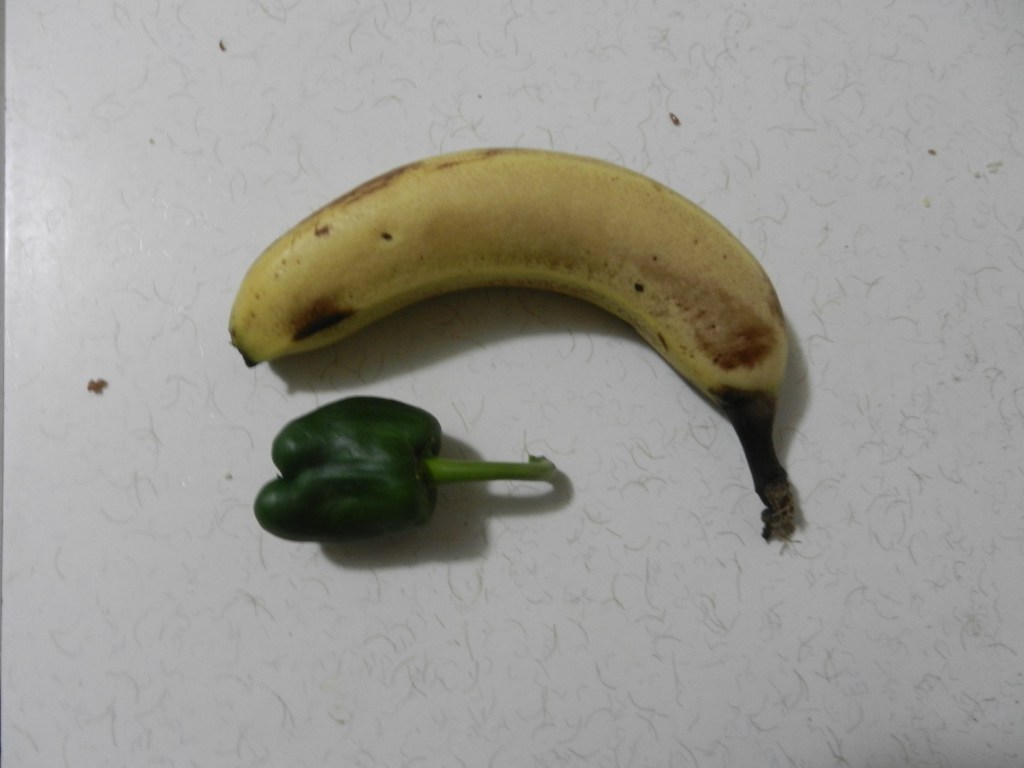
One year, I even grew tiny peppers and capsicum – banana for scale.
It’s not hard to see why gardening isn’t everyone’s idea of a fun time. It’s slow, painstaking work, and right now everything feels like its spinning out of control. We live in an age of ending, in the messy chaos of new things being born and made. This is a time of war and genocide, of poverty and inequality. The plant is warming and disasters coming more frequently. Far-right extremists and their movements have been rising in popularity across the world, while governments are committing further towards rearmament and militarism. We’re barely recovered from a pandemic which likely killed tens of millions of people – a pandemic that for many people, never ended. And amongst all of this, the only thing which seems to be keeping the global economy upright is the shockingly vast investment in AI technology, which will either fail (and crash the economy), succeed (and destroy the job market and with it, our lives), or go completely wrong (and maybe drive humanity towards extinction); if I’m not mistaken, all of those outcomes seem terrible. People are too poor, overwhelmed, and frightened to feel comfortable having families or planning for the future– how can anyone have the time to mess around with flowers in a garden?

Three things in life are certain: death, taxes, and a worsening ecological disaster caused by human carbon emissions which is already driving species to extinction and might eventually destroy whole cities and regions. Hard to blame people for feeling worried for the future. Source.
But the love of a garden is not an escape from the fears of the outside, or sticking your head in the ground to pretend everything’s fine. It’s a rebellious act of renewal and revival in defiance against systems of power which seek to alienate us from ourselves, each other, and the natural world. Just as humans were made to seek each other out and be communal, we were made to be near and amongst nature. Gardening is caring for the world in the most literal way: it is putting ourselves into something so it can grow. Thinking the point of gardening is just to grow the food you can harvest already misses (in my opinion) the real meaning, which is to simply exist in the world and take delight in the flourishing of life. Gardening in the apocalypse isn’t an act of escape, but one of restoration so you can go back out and keep fighting. It’s a tiny little reminder of how beautiful the world is and can still be. A little creation of a healthy, wonderful earth. In reality, the work isn’t tedious or boring, it’s enriching and strengthening.
In a way, gardening was the first duty of humans in Christian theory. The first people were made to be stewards of the created world, to nurture and to care for all that God had made. It’s in itself very telling that we managed to turn that story into one of justification for our excess and abuse of the natural world, a philosophy of extraction which now threatens to destroy our world order no less than Babylon ruined Jerusalem millennia ago. Our first duties were to lift up each other and to look after the natural world; and although collectively we’ve largely failed to do either very well, that doesn’t mean we can’t practice virtue in our own lives. Practice makes perfect, and the more time we spend with each other outside the better.
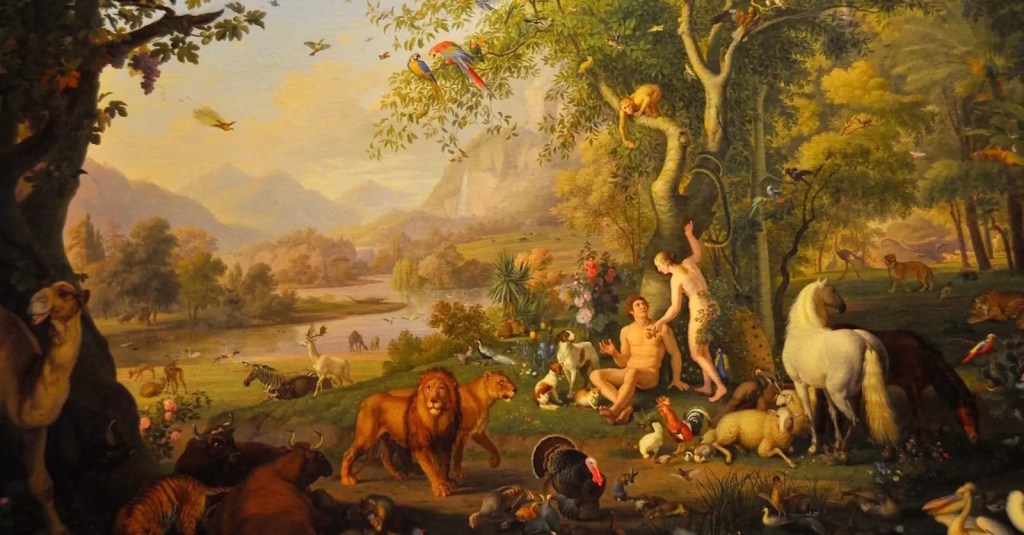
People spend too much time trying to find where Eden was (despite the story being clear humans weren’t exactly welcome back), and not enough time thinking on how we can make the planet we live on more like that garden and less wracked by exploitation. Source.
Alienation and atomisation mean we are more and more interwoven with new technologies. We’re told that our lives are constantly getting better, but we keep feeling poorer and more vulnerable, while jobs are scarce and debt keeps climbing. Gardening is a space separate from this, a time of just being and where the most important task is working out how to keep frost off the lemons. I like that. It’s good for us to be around trees and plants, to be in the sun and moving and standing. When corporations and social pressures want you to be on all the time, gardening is a refusal. It’s a self-care that cuts us off from our technology, at least for a little while.
Now, I know not everyone likes to garden. I might not be a good gardener, but I’m getting better each year (or so I tell myself). But I’d encourage anyone to do just a little more gardening than they did last year. Buy a little planter for your apartment and grow some herbs. Get a couple of pots and grow some tomatoes. Splurge and plant a tree, if you have the opportunity. Take some cuttings from plants you like and try to grow them up at home. Make a part of your weekly routines checking on the plant/s, and learn more about how to help them thrive. Enjoy the mysteries of how a succulent can be both indestructible and so easy to kill by accident, marvel at how some weeds will never truly die, and look on in horror on what the mint you planted in the ground has become (free tip: mint always goes in a pot). Don’t garden despite the storm clouds and the sense of impending doom; garden because of them. Do it because it’s good to be in the garden, to be around life and see things grow. And because you have faith that though things are scary right now, there’s going to be a future, and one day someone else will get a chance to see and be delighted by the things you helped create.
– The Teaspoon
 The Teaspoon Brigade
Leave a comment