Imperialism is on the rise again. Russia’s full-scale invasion of Ukraine has entered its fifth year, and continues to grind on for minimal gains and massive loss of life. Israel is seeking to fully annex the West Bank in defiance of International Law, which still holds the occupation and settlement of the region to be illegal. There are fears that China may soon seek to, one way or another, take over the island of Taiwan. And of course, the USA has followed up on their attack on Venezuela by bombarding Iran and continuing to threaten Cuba, all the while gushing about all the oil they’ll soon control and all the money they’re going to make. This is outright colonialism and imperialism, and as it returns to the fore I want to talk about what justice looks like in the aftermath. Every empire falls eventually, and our world is full of broken regimes whose imperial violence has never been redressed. So, what does justice for the victims of imperialism and colonialism look like, and who out there owes a debt?
Before we begin to answer that question though, I want to go over what we know for a fact. We recognise the principle of intergenerational trauma, that the psychological harm and distress of violence can be passed down generations and affect entire communities. We know that wealth and land, just like matter, are not ‘destroyed’ but transferred – during genocides and ethnic cleansings, as people are killed and driven from their homes and land with their wealth confiscated, that wealth went somewhere, to a person or government, and the inheritors of that wealth and land are still alive today. We know that officials and individuals culpable in the acts of ethnic cleansing, crimes against humanity, and genocide can and have been persecuted for their actions, and that bringing justice can involve concrete actions to right wrongs. And we know that entire societies have been bent towards racial supremacy and the act of ethnic violence and dispossession; and that dismantling or resisting the ideology of racial supremacy has taken active effort and action. This isn’t just speculation, these principles come from the aftermath of the Second World War and the decolonisation movement, and from our better understanding of people. With that said, what’s our picture of justice and restitution for the victims of imperialism, the people who are killed and exploited and dominated?
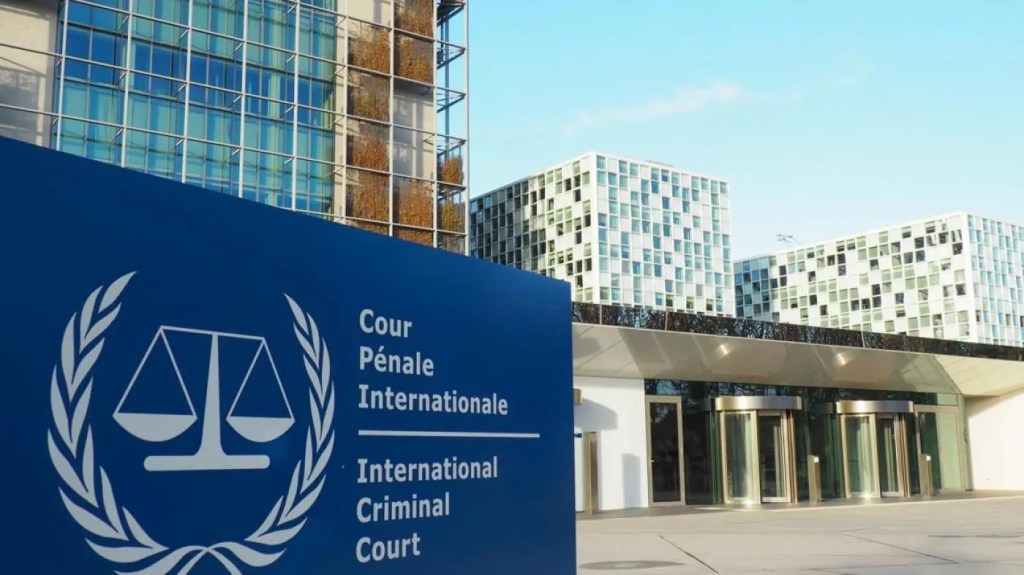
We built an entire system to manage international justice and hold powerful people or countries accountable for their wrongdoings – it seems a shame if we don’t use it. Source.
It’s not my place to decide the justice process alone, to enforce the model of reparations as I might see it. I have views, but I’m fundamentally not the person who determines this. I’ve benefited from the wrongs of colonialism and imperialism, from genocide and dispossession. I want to see that wrong redressed very much, but we won’t solve this dilemma of exploitation, dispossession, and genocide by just listening to me. It is the survivors, and descendants of survivors, who should decide what justice should look like and what action is meaningful. But I would like to remind all us beneficiaries of colonial and imperial violence that serving justice means delivering agency and action to survivors – that means their decisions and desires might not align with the exploiters and their descendants, and deliver us to discomfort. That is not only acceptable, it’s expected, and something we should never use to stop the process. If someone stole your home and began to live in it, and it took two years to finish the legal process to remove them, their protests of discomfort would ring hollow, right? If we control the process of doing justice, we prevent justice taking place at all, because power stays in our hands. Redress for historical wrongdoing might take many forms – financial payments, legal protections, the right to return, additional or changed names for places and territories, the returning of land and sovereignty. Some of these might be disquieting, but to be clear: if Indigenous peoples decide redress means they have a legal right to deny a new mine or factory on their lands, then they should get that right. If a people want their land returned to them, we should accept that and make room.
Now we’re talking about some of those scary things – reparations, returning land. But why is it so scary? These ideas have precedents, after all. I won’t pretend that precedent isn’t scary or contentious: in 1825, the French forced Haiti to an indemnity of 150,000,000 Francs over claims of lost property (including slaves) the French had suffered through Haitian independence. The cost to Haiti has been estimated at $21 billion in present-day dollars, a debt that Haiti only finished paying off in 1947 and likely played a large role in the islands financial distress over the centuries. Then there’s the German example: the harsh reparations the Germans faced following the war were a cause of great bitterness and resentment, enabling the rise of fascism through anger at Allied powers – or at least, that’s the narrative. Because in reality, the Germans also paid reparations after the Second World War, as did their allies. Italy paid over eight billion 2024 dollars in reparations, Finland paid 6.7 billion, as did Hungary and Romania, while Bulgaria paid 1.5 billion. In Germany’s case, war reparations included the dismantling of industry, the seizure of all manufacturing equipment and machinery, seizing all trains, cars, and ships, confiscating all German investment overseas and all gold, silver, and platinum in bullion or coin form, and the forced labour of the German population. Germany also paid around 714 million modern USD to Israel in reparations. Interestingly, all of those reparations seem to have done their job, and it’s rare to see anyone say they caused problems for us today. So clearly reparations can be levied; the most troublesome aspects of them are their ability to punish wrongfully, or to foster resentment. Thankfully, if done today these reparations would be delivered voluntarily by some of the wealthiest nations in the world (more on that later), to rectify what is globally considered the highest of wrongdoings: genocide and ethnic cleansing. Are there reasonable, humane people that would argue against redress for genocide?

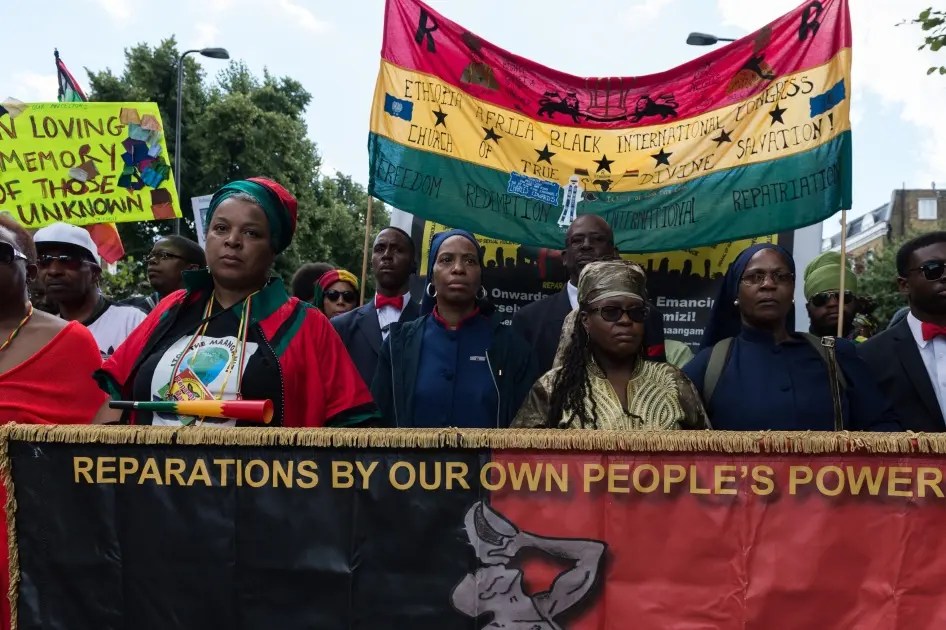
If countries like the US and UK are truly so wealthy and democratic, it shouldn’t be too difficult to create the political will to make redress for victims of prior violence, right? Picture Source.
Now, let’s talk about returning land. It might sound impossible, but again, there is precedent. After the Holocaust, Jewish people were affirmed in their desire for a state of their own, a government who would look to their interests and not persecute them. Where was that nation established? It was not formed in the remains of Nazi Germany, in Prussia or Bavaria, the lands of the people who had perpetuated the genocide. It was formed in the ‘historical lands’ of their people, territory which was sacred and culturally essential to them. This delivers to us a form of historical precedent for a statute of limitations on returning land, and other redress. Over two thousand years passed from the Roman conquest of Jerusalem under Pompeii in 63BCE to the formation of Israel in 1948, the length of time the region did not have an independent, sovereign Jewish state. While this does not tell us the maximum amount of time that can pass before a land is handed back to those it ‘traditionally’ belonged to, it does offer an example. It could be argued that the case of Israel and the Holocaust is in one shape or another exceptional. Just in case that’s true, I’ll limit my estimates here on a debt of restitution, be that that the right to have land returned, funds paid, or anything else, at only a quarter of the Israeli case: around five hundred years. Below are some of the modern nation states who by that measure have outstanding debts to pay for prior genocidal violence and dispossession, or who have benefited from that violence as successor governments. This list is by nature incomplete, and I welcome scholarship that notes additional groups who require redress, and states who should deliver it.
Nations needing to give redress for colonial atrocities include all the old Imperial European powers; Britain, France, the Netherlands, Spain, Portugal, Germany and Belgium. Several modern nations exist on stolen, colonial land which was ‘settled’ by Europeans who then gained autonomy or independence from Europe: the United States, Canada, Australia, New Zealand. These four all have indigenous populations within them who were forced from their homes, treated with inhumanity, and who suffer as a community because of this. There has been cultural destruction, the ruin of sacred places, and the continued refusal to truly accept the wrongs of the past. This might sound too long ago for meaningful action, but that’s a narrative and sleight of hand trick you’ve been told. All the above were actively committing atrocities and harms within living memory. In the cases colonial countries, the harms are still happening right now, at this minute, because one of the harms was stealing of land and not returning it. We can’t forget that when the colonial powers withdrew, they did not pay reparations for what they had done – that debt is still owed. The British left India and Pakistan in 1947; the French accepted Algeria’s independence in 1962; the Portuguese left Angola in 1975; Zimbabwe gained independence in 1980. The Americans landed men on the moon before the Europeans left Africa. This is not ancient history.

Pictured: History more ancient than an independent Oman, Tonga, Bahrain, UAE, Bangladesh, Bahamas, Mozambique, Angola, Suriname, and Djibouti – among others. Source.
Honestly this is just one example of an ongoing injustice that needs addressing today. There are ethnostates which purged ethnic minorities, and world powers who have forcibly absorbed and exploited neighbours, turning sovereign groups into provinces which can be controlled or exploited. It’s striking how many of those liable for redress and reparation are among the richest and most powerful in the world; twelve of the twenty richest nations by GDP (The USA, China, Germany, the UK, France, Italy, Canada, Russia, Australia, Spain, Turkey and the Netherlands) have outstanding debts to other nations and peoples, and others (Mexico, Brazil, Japan) are either successor states who have problematic relationships with local indigenous communities, or have their own legacy of colonial expansion. All five permanent UN Security Council Members owe some redress for recent historical wrongdoing, as do all the G7 members. There are almost two hundred sovereign nations in the world: Is it simply a coincidence that so many of the richest and most powerful of them have recent histories of exploitation and atrocity? Or is it the case that the wealth and might of states like the USA, Russia, China, and the legacy powers in Europe, are born and built on the violence done to others? Could the USA be what it is today if not for the genocide of Indigenous Americans? Would Australia, the lucky country, be so wealthy if Indigenous Australians were able to block new coal and iron mines on their sacred land? Would European colonialists have been able to build their stable democracies without the wealth and suffering of the colonies? Make no mistake; the riches and power of the world’s strongest nations is built atop the misery, exploitation, and genocide of others. There is a debt owed, and it has more than come due – it is incumbent on the governments and peoples of those nations to give redress, in the forms and manner chosen by survivors and their descendants, so that justice can prevail and the wounds of the past heal.
It is well and good to say people should ‘move on,’ but nobody can move on with a knife in their back or chains on their wrists. Justice comes first, and it might be difficult for those of us used to being the protagonists of history, the guardians of progress. But it is the only way we as a global community can move forward. The debts are due and the time for listening, hearing, and accepting has come for us who are used to speaking and acting. Imperialism is on the rise, and soon there will be yet more victims of its atrocities. It is their right to speak and demand, and our duty to deliver, even if it costs us wealth, luxury, or land. That’s the cost of justice and reconciliation.
– The Teaspoon
Picture Source.
 The Teaspoon Brigade
Leave a comment