In a gathering, a friend once asked recently: why is it, that the USA keeps intervening in the Middle East and starting wars, when they keep insisting they want isolationism? A couple of people had answers: one response was that elected administrations want to be seen in action, not passive, and so they’re inclined to intervene. A different answer was that intervention was due to lobbying, and another that the isolationist rhetoric was performative – a fake principle the US didn’t really believe in. While there is truth in all these, I think the reality of it is a little different. Why does the USA launch these wars? Because they can, and because they need to. Because war makes money, and because if the US doesn’t obliterate someone every now and again, then other countries might forget their place.
Firstly, war is profitable. Global military expenditure was almost 2.9 trillion dollars in 2025, driven by the recent uptick in warfare. All that money goes somewhere, to companies and executives and flows from there through the global economy. Arms companies employ thousands of people and make billions in revenue – and war is good for business. But it’s not just profitable for the corporations making bombs, guns, and bullets. War is also a great way for politicians to enrich themselves, especially thanks to polymarkets allowing bets on say, whether a country is going to be bombed tomorrow. The Trump administration routinely claimed peace was just around the corner during the on again, off again war with Iran, a statement which just so happened to help lower petrol prices – even if it was almost always wrong. Why does the USA keep engaging in war, despite the isolationist rhetoric? Well, it usually makes a lot of money, at least for some of the people best able to lobby politicians. Mind you, war isn’t always a good business move. It’s certainly bad if your country is the one being bombed and invaded. But for those oceans away from the carnage, it can make a pretty penny. But that’s the easier part of the answer. Why launch all these wars? To maintain power.
“If I didn’t shoot one or two now and then, they’d forget who I am.” – Quote attributed to Blackbeard, after shooting one of his own crew.
The USA is a modern-day empire. Like all empires, it exists in a state of routine crisis and overextension, fighting constantly to prevent decline or collapse. Sometimes, I think we imagine power and domination getting easier the more you control, but that isn’t really true. Every empire is beset on all sides, trying to prevent secession or stagnation, to keep up appearances that they’re stronger than ever even as resources and manpower is stretched more and more. The US national debt is nearing 40 trillion dollars (over 7.7 trillion of which is held by other countries), and by 2030 might reach 131% of GDP. The main reason the US economy is healthy is because if it was ever acknowledged that is wasn’t healthy, all manner of chaos would break loose. We shouldn’t make the mistake of believing the hype of an empire, that it is mighty and powerful and in control. They aren’t, but you can’t let the illusion slip away if you want to maintain your authority. Invading and bombing other countries isn’t the only way to keep projecting power of course, but it is an essential one.
The politicians calling for isolationism don’t want to be completely isolated – they don’t want to lose their privileges and prerogatives as a world hegemon. A nation isolated from world affairs would lose its entitlements to intervene to protect their interests, after all. What they want is to be free of obligations to other countries. They dislike the US imperial model, primarily based as it has been on things like aid and mutual support. They believe in a kind of American Superiority: why should they have to earn loyalty and compliance? From this lens, it’s not exactly a surprise that the Trump administration has settled on military action as a way to express power. They’ve already rejected most of the more subtle methods; what other ways are left? By kidnapping leaders or bombing nations, by funding interventions and military operations, the USA reminds the world at large why it’s good to be their ally and not their enemy. If they didn’t bomb someone every now and again, we’d forget who they were.
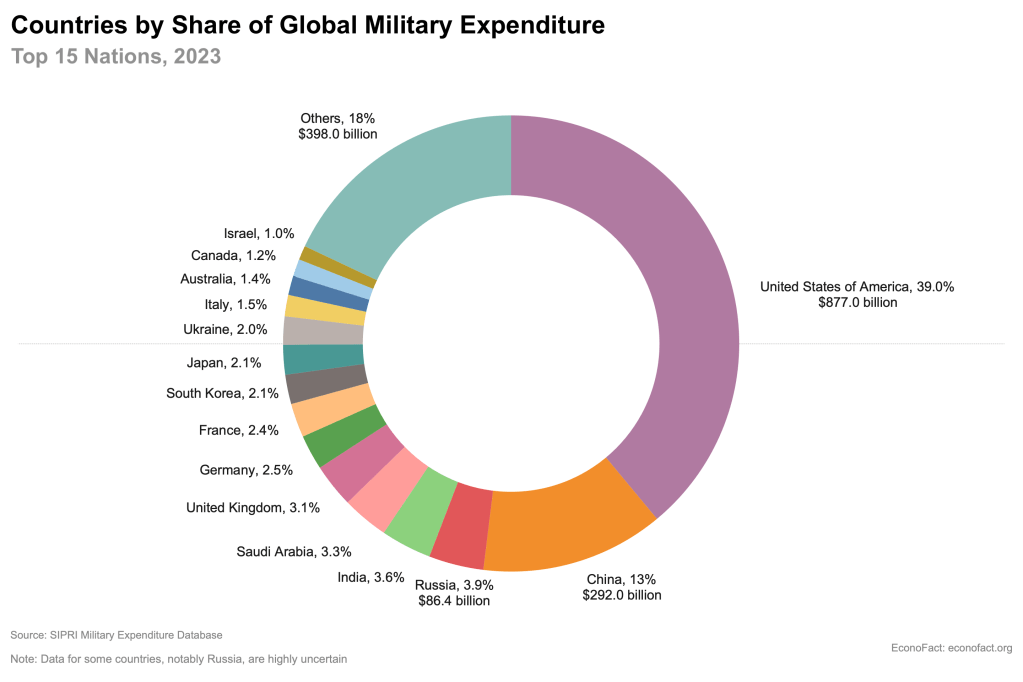
Generally speaking, nations don’t spend hundreds of billions on their military for the sake of peace – and the US wouldn’t be spending this much on their war machine if they weren’t expecting to use it. Picture Source.
I’ve been hoping to see peace reestablished in the Middle East, but it seems more likely at present to see a sort of forever war. Conflicts that never quite end, but are always flitting between ceasefire and warfare as best suits the forces involved. According to the agreement last year, Israel should have begun winding down operations in Gaza. Instead, over 1,200 have been killed and the line marking occupation keeps creeping forward. Lebanon too, is still being bombed. War in Iran halted, then restarted, and now is (maybe) halting again. In that last case, one wonders how much longer the USA can drag the process out before acknowledging strategic losses – but they’re trying their best to wriggle their way out of it. On the other hand, considering the first Trump administration ended in a violent ‘riot’ which attempted to prevent a peaceful handover of power, maybe is suits the current Trump administration to have a convenient ‘War Crisis’ at hand.
And maybe that’s the best answer to the question. Why does an isolationist administration launch wars and interventions? For politics. To keep presenting a powerful image, or for personal political gains. To make money. To generate fear and respect where you want them. Leaders insist that these conflicts make people “safer” by removing threats, but is anyone being made safe from this slaughter? Violence begets violence, war begets war. It is peace and justice which actually create safety, not bombs and bullets. Forever war is something we should reject, categorically.
– The Teaspoon
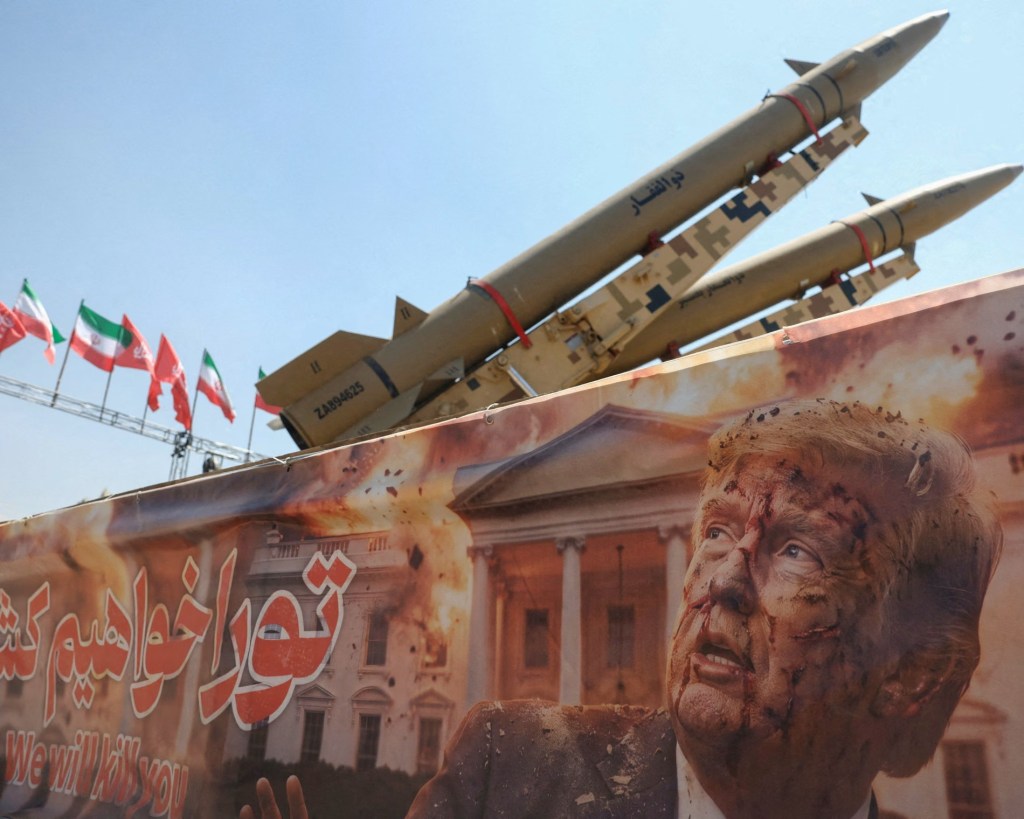
Featured Picture Source.
 The Teaspoon Brigade
Leave a comment