Be alert: spoilers for The Boys and for Star Trek: Deep Space Nine to follow.
So, here’s a dumb question for us all to chew on: what is the point of art? Why do we make it? I suppose in our current day and age most things get made or produced to make money, but I don’t think most would be satisfied saying art exists for the sake of profit (unless you were a Ferengi). Often, art exists to entertain, but once we step out from media and performance art “entertaining” becomes a fuzzy concept – is the fine craftsmanship of a stained-glass window entertaining? Is entertaining a good word for even something like a painting or sculpture? There’s not exactly a single point to art of course, but I think if we were going to boil it down, we’d say art’s purpose is to inspire – it exists to prompt questions, to convey messages, to tell stories, and through all that inspire and compel us. With this in mind, let’s talk about The Boys.
I don’t think I need to explain or introduce the premise of Amazon’s The Boys to you – it’s the dark, gritty take on superheroes which skewers both capitalist corporations and the idea of super-powered humans: its heroes are sponsored by a major corporation, get brand deals, and most spend most of their spare time being horrible or perverted. If I’m doing a poor job selling the show to you, that’s because I’ve never been a huge fan, but it did reach a lot of people, get pretty popular over the last seven or so years, and it recently finished its final season – at least, final for the main show, we’ll see what spin offs, prequels, or sequels get released. However, the finale wasn’t exactly well received, and it disappointed plenty of fans and reviewers. Someone else pointed out to me that few if any TV shows end well these days, so maybe it’s not surprising that The Boys had such a fizzle of a finish. But I think there’s a little more at play here than just the inability of modern television to end well, as promising a topic as that is.
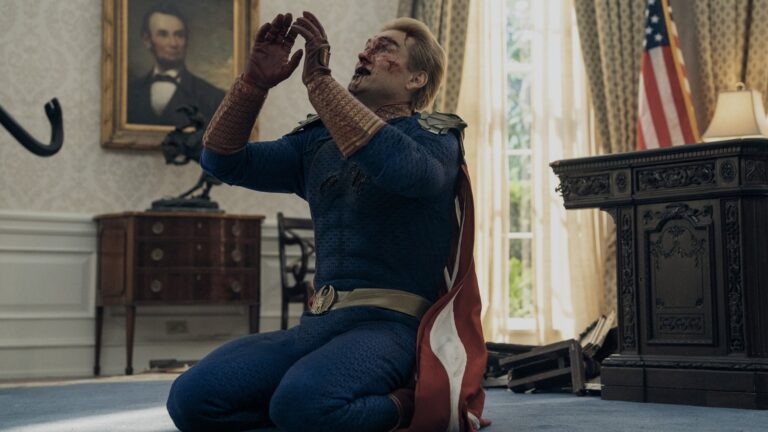
Not to dismiss the views of the creative team, but did it really need to be Butcher who killed Homelander? Why fulfill the hyper-violent masculine revenge fantasy? Butcher being forced to confront the futility of vengeance by having revenge denied might have been an interesting thing to explore, you know? Source.
What went wrong with the ending of The Boys? Well, some weren’t impressed with the defeat of series villain Homelander. A ‘realistic’ Superman who was equal parts violently psychotic and profoundly insecure, he’d been a reference to the American far right and carried outright Trumpian overtones in later seasons. He’d murdered, betrayed, and bungled his way to the very top, becoming the president in all but name and believing himself a God. In the finale, he’s confronted by his Nemesis Billy Butcher, one of the show’s morally grey protagonists who had yearned for revenge over Homelander’s rape of his wife Becca, believing it drove her to suicide (both the protagonists of this show are driven by violence done to their partners, a example of crappy sexist tropes we should have moved beyond decades back). After a short fight, Butcher and his allies disempower Homelander, who is promptly murdered by Butcher. No more Homelander. Some were hoping for a grand epic battle, perhaps where Homelander would go on a rampage brutally murdering innocents until he was finally put down. But I’ll break with consensus here and say that of all the flaws in the finale, the choice they made here was right. Homelander shouldn’t get that kind of ending, and doesn’t deserve it.
Because Homelander the character represents both the far right as they actually are, (weak, insecure, and desperate), and the fear progressive have of what they could be like if they got power. Homelander is at his core, a pathetic man who relies on violence and brute force to get his way. He’s a man in desperate need for approval, who despite all his strength and super powers caves when confronted, and who usually picks on the weak. Granting Homelander a big send off sends the exact wrong message – that these people are brutal warriors who go into berserk mode when staring down defeat. But fascists and authoritarians don’t do that in real life. Hitler, and all of his leading Nazi followers, chose suicide over a final reckoning. They were all cowards, and so is Homelander. He would cave in his final moments. The only writing misstep in his end is fulfilling Butcher’s revenge fantasy – a more fitting thematic end would be for the disempowered Homelander to dive out a window and break his neck; a suitably ignoble end for a cowardly man. No, the problem with The Boys’ ending isn’t that there was no big bloody final fight, it’s that the show opts for a profoundly cynical and conservative worldview at its conclusion.
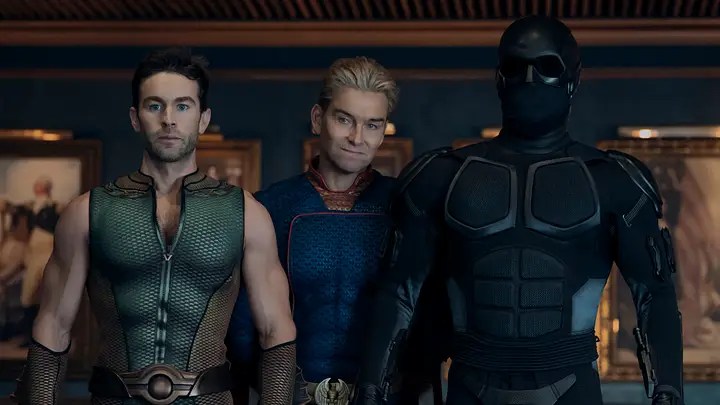
No matter how scummy or evil these men are, them dying horrible deaths is a crappy example of people facing actual repercussions or achieving real restitution. If your show is about the ills of capitalism and corporations, that’s what needs to be overcome in your finale. Picture Source.
The Boys wasn’t simply about how Homelander and his henchmen were bad people, but rather how corporations and institutions propagate, enable, and protect horrible people with power. And when you tell a story like that, where systemic injustice and harm is being called out, you can’t just end the show by killing off some bad people and call it a day. At the end of The Boys, Homelander is dead, as are most of his cronies. But Vought, the corporation that made these men and is the real villain of the show, is still intact. In fact, the same guy who was running it in season one (Stan Edgar) is revealed to be back in charge in the finale. Soldier Boy goes back into the cryosleep he started in, like he’d never left at all. None of the systemic problems of the world are actually addressed, and when Butcher tries to justify an attempted genocide against all supes because eventually, another Homelander will arise, it’s hard as a viewer to argue he’s wrong. No progressive show should be making mass murder a reasonable argument (thankfully, Butcher stops short of his plan, and is killed by our other protagonist Hughie; and then our manly gruff anti-hero dies in his friend’s arms).
This is conservative art; media which propagates and supports a conservative worldview, in which evil can only be fought at the individual level and systemic change is functionally impossible. One where things like power and authority just inevitably lead to corruption and depravity and where former CIA agents are ‘good guys’ who are taking on bad dudes – even if most of them are motivated by personal revenge, often a dead woman in their past who is little more than a MacGuffin. You might assume the show is progressive, since it critiques the far right and white supremacy, or because Homelander is often a satire of Trump. But sadly, a lot of the most successful conservative media is made by progressives. We’ve become so disillusioned and cynical we’ve accepted the conservative worldview, and that gets reflected again and again in the media which gets made and released. By the end of the show, what’s really changed? Most of the bad men are dead, but they never really faced the consequences of their actions – dying is the easy way out, as the Nazi’s proved. The same corporations are around likely doing the same things; the men whose women were killed get their catharsis and revenge, while our surviving protagonist gets to name his future child after his dead old girlfriend. Is this a progressive perspective on the world?
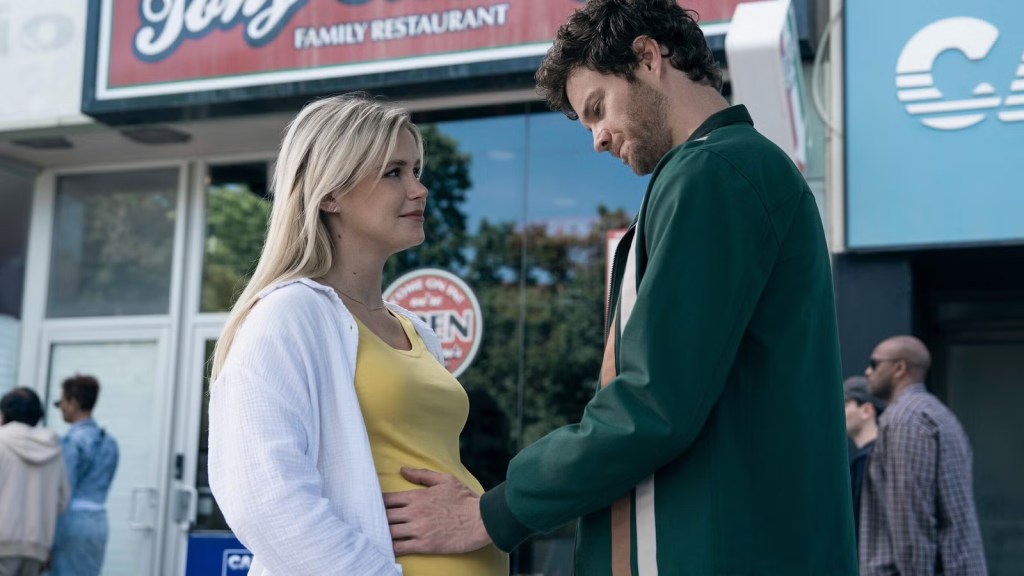
I don’t know if I want to even go into conversations about race and gender in this show (or other “realistic” media). For now, I’ll just say that while Starlight deserves better, the show at least did better by her than the original comics did. Not that this is a high bar. Source.
It doesn’t need to be this way. Star Trek’s Deep Space Nine is a sprawling show with over one hundred and fifty episodes which does a lot of social commentary. And to avoid spoiling its ending too much, most of its villains actually survive the finale – in fact, one of the villainous factions are literal clones, making killing any specific member a useless action which barely slows down their institutional evil. What better way to communicate that actually beating systemic wrongs has to go beyond punishing a specific individual? DS9’s war ends with a treaty, a fundamentally changed political climate which creates the possibility of a better future – though at great cost, because violence and war are bad. Not bad in a cool grim way, but a tragic and sad one. Sadly, this kind of ending is shockingly rare today. Too often in recent years, we can only find stories like The Boys, which tell us that big change doesn’t happen, that the best we can hope for is individuals to be punished, often by death, for their wrongdoing. Stories which are all too happy to tell us to expect disappointment, because that’s “realistic.”
The point of art is to compel, to inspire, to drive us forward. I won’t doubt that The Boys is a show people found entertaining, or interesting. But to make really good art and media you need to inspire your audience and give them something to care about. Perhaps Amazon’s The Boys wasn’t quite willing to engage with how brutal corporations could be reigned in or outright dissolved. Maybe the creative team just thought this ending was more “realistic,” I don’t know. But the message of this show was ultimately a deeply cynical and sad one, and that doesn’t encourage us to go out and change the world. I disagree that we should expect Homelanders to keep being created and just try to put out the fires when they break out. We can do better than that. And if a show like They Boys ends up reinforcing conservative ideas in its finale, then I for one can’t help but be disappointed in it.
– The Teaspoon
 The Teaspoon Brigade
Leave a comment