If you spend a lot of time around spiritual or religious communities, you can forget how they look from the outside. Not only that, you can take for granted the insights or nuances you’ve come to over the years, forgetting that most people only see the exterior and the easiest pieces of theology or philosophy to access. People are critical of religion as an institution of rules, laws, and fear. As something that generates shame and guilt in people. This is especially true of Christianity, a religion seemingly framed around criminalisation, punishment, wrath, and guilt. God murdering his Son because of your crimes. A transactional salvation dependent on you doing the right thing and being the right kind of person. A religion more interested in your private life than in any injustice or political action. If that was the totality of Christianity, this criticism would be hard to argue with. And to many critics credit, this is the image and picture of Christianity (or religion in general) that they have. But this is the funny thing, because there’s a lot more to faith and spirituality than laws and punishment.
As it turns out, there’s actually several ways of understanding and talking about Jesus of Nazareth and the Christian faith, and the language of punishment and purchase is only one of them. Depending on how you’re looking at it, “sin” could be a matter of lawbreaking, or it could be about sickness and health. It could be about captivity and freedom, or about maturation and growth. It could be about taking shame and guilt on, or about being set free from them. I’ll admit, for someone of faith I think about some of these ideas of punishment very rarely. It’s not my preferred way to talk about God or faith – partly because, for all our faults as people, I don’t think we’re evil or criminals at our core. If humans are made in the Image of God, and God is Good and Love, then Goodness and Love are the core of us, and all the nasty or evil things are exterior, things which creep into us or are imposed upon us by institutions or systems. People are not born into evil so much as they are born into poverty, deprivation, isolation, and trauma. We’re taught the language of sin, and we take it on by necessity to survive in a world where violence and power rule.
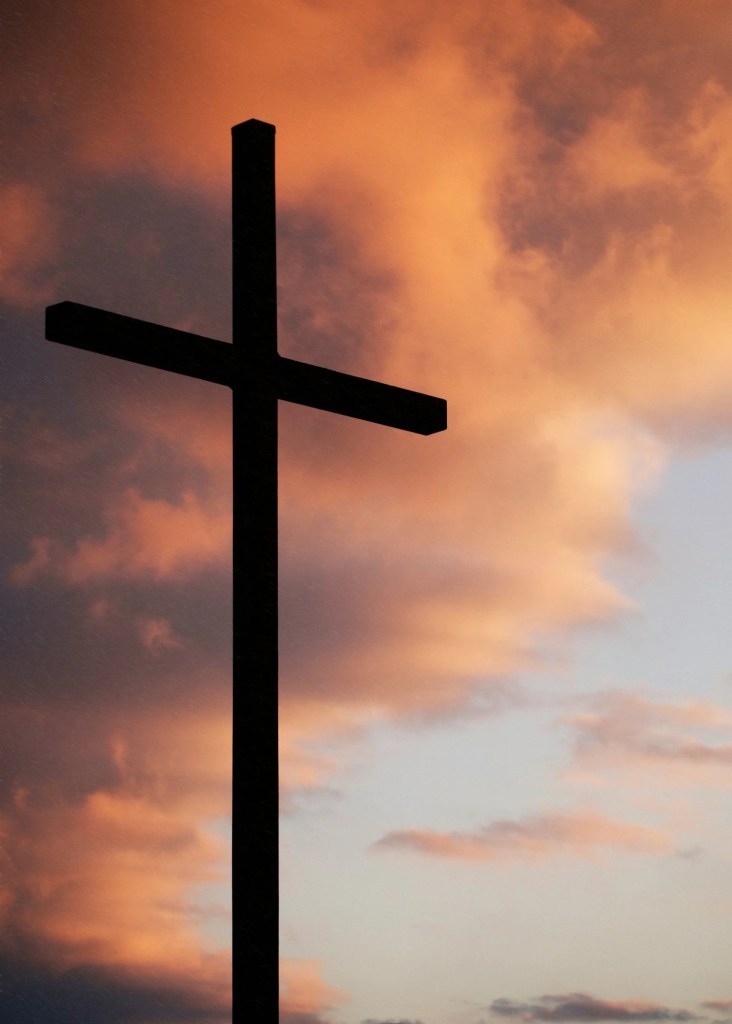
It shouldn’t be overlooked that the cross is a genuine old symbol of shame and death which Christians turned into a symbol of hope. Fear and guilt defeated, transformed by love. It’s no wonder the faith had a hand in bringing down Rome’s Empire. Picture Source.
I don’t think fear or shame should be the primary feeling we have in relation to God and the divine; Biblically, 1 John 4 argues against that quite completely. We might be in ‘fear’ of God in the old manner of speaking, but that’s a relationship based in awe and wonder, not guilt and punishment. In Christian theology, God is not some outside authority (though they are very much different to us) – God is someone you have an actual relationship with. You speak with God, you trust in God, you listen to God and God listens to you. God wants this kind of relationship to people! And there can be no healthy relationship based on intimidation or terror. I wouldn’t say God has no requirement of us – all relationships have some requirements after all. But God’s requirements are clearly stated: to act with kindness, to pursue justice, and to walk humbly alongside God. Those instructions aren’t some later Christian writing, by the way – the come from the writings of the Prophet Micah, who lived and died centuries before Jesus.
The word I’ve enjoyed recently for how one relates to God is Wonder – like a child wondering at the beauty and majesty of the world, so too do we wonder at, and wonder with, God. Christians don’t quite believe God is contained in the created world, but it is a place where God is encountered, discovered, and heard. Talking a walk in nature is a profoundly spiritual activity, because it’s then we tend to stumble into God and have a moment of wonder and joy. And those are the feelings spirituality should nurture and elicit in us – joy, delight, gentleness, mercy, hope, love. It’s not something the Church tends to advertise, of course. The church, often under pressure and feeling ‘attacked’ by the modern world, is usually defensive and trying desperately to protect its prerogatives. The voice of God is a still, small one, and it’s easy to drown it out with recrimination and fear. The Church has done a fine job of convincing everyone our faith is about terror and punishment, that the point of believing is to protect yourself from the fires of hell. But Christians don’t (or shouldn’t) be doing good things to get saved. The point was always that Christians were transformed by God and that goodness and kindness were the residue of this transformation. Being saved, being loved by God happens first.

Paul once wrote the fruit of the Spirit included love, joy, peace, patience, kindness and gentleness (among others). Judgement, condemnation, austerity, obedience, and conformity did not come up. Make of this what you will. Picture Source.
I wouldn’t pretend that Christianity hasn’t had a hand in atrocities and evils over the past centuries and millennia. There’s a great deal Christians must reckon with and acknowledge, even if doing so is frightening or costs them privileges. But I would stress that the faith and spirituality of Christ is distinct from any institution, and that the wonder and joy of God is worth pursuing all on its own. There’s a kind of awe that comes from the Divine, from the principle that the world is bigger, more mysterious, and surprising than we give it credit for. I won’t speak for other spiritual traditions, but that mystery and wonder is something I think you will stumble upon in just about every faith tradition. The amazement that comes from sensing something just out of reach, a presence you can’t quite define. Spirituality emerges from this first and foremost, not from fear and punishment. If fear and punishment worked to develop faith or to encounter God and the spiritual, then it wouldn’t have created so very many atheists.
Of course, the above leads to far more questions than it does answers. Something I think is important about the Divine is that is unseats us from certainty, positions us where we must accept ambiguity, things that are hard or impossible to explain. How do you know which God or tradition to follow? How do you know if you’re saved and chosen by God? How can you be sure? The truth is you might not get to know. Doubt and uncertainty go hand in hand with faith. And honestly, this is a good thing. If I had all the knowledge and wisdom I needed, if I could completely claim to know the world and how it worked, then I wouldn’t need anyone else. There would be nothing another person or experience could teach me. But if I am uncertain, I have to keep an eye and ear out. There’s an idea in Christianity that being in Gods image is not so much that you or I “look” like God, or that the image is contained in just me. Rather, it is humanity as a whole that reflects God, in all our diversity and complexity. This, I like, not least because of how it maps onto the Christian idea of the Trinity.
Ultimately, the point is that judgement and fear don’t need to be what faith is. There might be people who would tell you otherwise, but they can’t keep someone away who believes or attends despite them. The joy of faith is from the life lived both inward and outward, focused intensely on the contours of a soul and of the reconciliation of a planet. These are some of those things one takes for granted, which don’t slip by the walls and barriers institutions establish to protect themselves. If you do like to Wonder, don’t be held at bay by a narrative of fear and punishment which is actually optional.
– The Teaspoon


Leave a Reply