The connections between religion and conservative politics always seem to run deep. Religious institutions are always protecting their prerogatives, supporting “traditional values” and opposing rights to marginalised groups in favour of their own ethical systems – which they apparently want everyone to follow. However, religion and faith haven’t always been in lock-step with conservatism, and there are conservative movements who treat religion more as a fashion style than a system of beliefs, like many Christian Nationalists. I want to take a moment here and give an accounting of how religion ended up hand in hand with conservatism, what that might be costing inclusive and progressive people, and affirm that faith and spirituality belong to everyone. Nobody can forcibly change what you believe, and defiance or healing from religious trauma doesn’t need to involve leaving faith entirely – people leaving is honestly what the conservatives want, because that gives them more power and control to shape the institutions.
How did we get here? I won’t pretend that religion used to always represent cool inclusive politics until some sinister man snatched it away, religious institutions have had their hands in all kinds of cruel, unjust, or bigoted policies in history. There’s a lot of baggage, and a lot of things different religious groups and institutions should atone for (if you’ll allow me the reference). But: that isn’t to say religion was always aligned with conservatism. In Christianity alone, religious leaders helped organise peasant revolts for better rights; they argued against colonial violence and later, slavery; they spoke out against war, wealth inequality, and gave care to groups otherwise shunned by society. Not only that, but religion cut across many political divides, such that there have been many revolutionaries and activists and scientists of faith. For most of history, it wasn’t something easily aligned onto one political party or ideology – it fell, and even today still falls, all over the political landscape. But then something happened, which created a firm alignment between religion and conservatism. The American conservatives build the Religious Right.
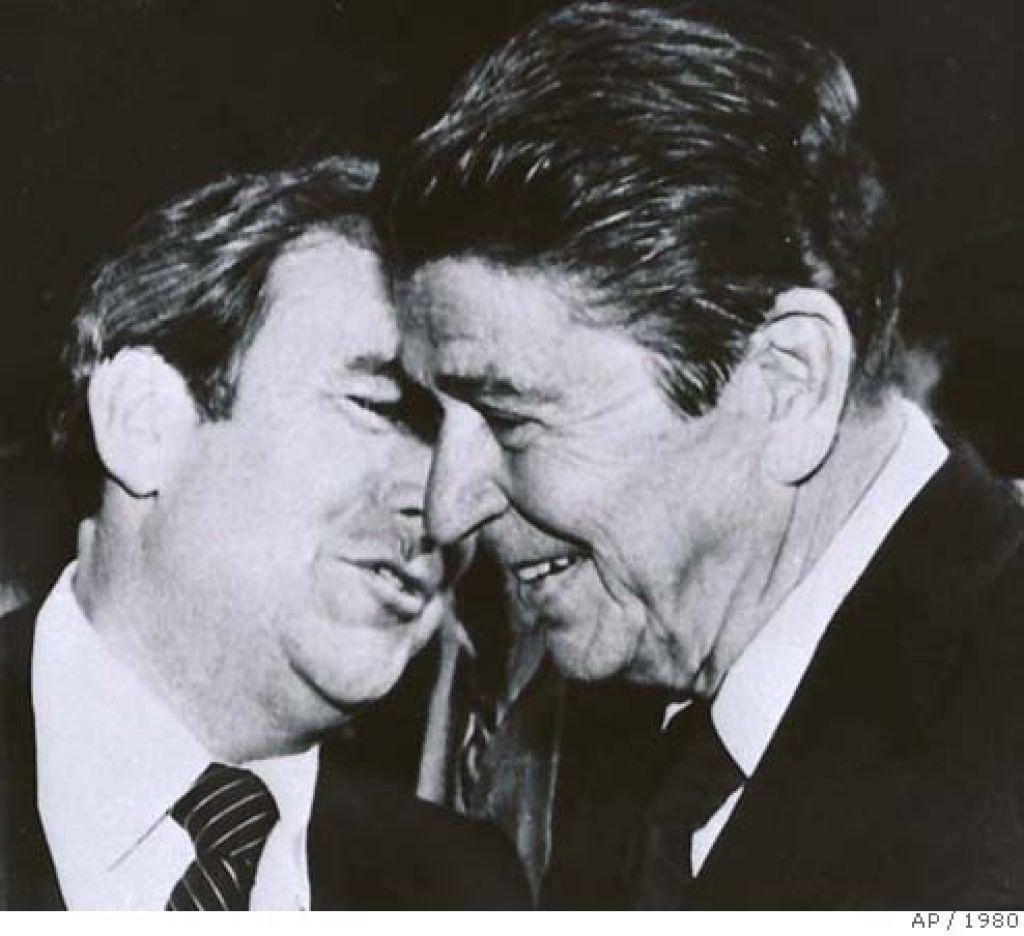
It’s not just Jerry Falwell & Co’s fault, but the Moral Majority helped push a lot of toxic ideas in US politics and gathered too many religious folk around conservatism. Source.
It’s not entirely shocking – in a lot of countries, one religion or another forms part of the “traditional culture” that conservatives like to claim they defend. But the American Religious Right, formed through politicians stoking fear and anger as abortion was legalised and segregation came down, was a much more solid coalition. Christians who had until recently sat on the sidelines of politics now entered in force, and their support to Reagan was significant – which in turned proved how powerful a faction religious people could be if marshaled together into one movement’s tent. Since the 1980s, American conservatives have pushed the religion line hard, fearmongering that the opposition are Godless, or believe in the wrong Gods, that they want to destroy the place of Christianity in American society. This despite the fact that every single Democrat president or candidate since 1980 has been a more committed and faithful Christian than the current US president, a Republican. Because Christians fear losing their prerogatives and cultural safety, and plenty had at least some conservative views, it was easy to wind them up and keep them angry over the war on Christmas or some other nonsense. Anything to keep people from noticing the hypocrisy.
Because let’s be honest: there’s just as much in religious texts that promote progressive or inclusive politics. A short list of positions major religions hold, including some fundamental key positions, includes celebrating humility, forgiveness of debt, kindness, and mercy. World religions emphasise empathy and justice over wealth, pride and greed, and several openly endorse refugees and denounce violence. Several are explicitly pacifist in theology. All major world religions are united on the importance, and in some cases holiness, of love. There’s no reason any of the above should be subordinated below views on gay rights or abortion – in fact, there’s often a lot of reasons those latter issues should be subordinated underneath love and mercy, even if you held a conservative position on them. Religion is spun to us as conservative because that has been beneficial to conservatives, and because the things conservatives want us to be focused on are things religious people might be more conservative about (a problem for religious groups to sort out themselves).
When people put a religion to hate, to bigotry, to domination and violence, that’s the aberration – that’s the unnatural use of faith.
Handing over God to the conservatives empowers them. It lets them paint themselves as the custodians of huge amounts of culture and history, and gives them the chance to argue they’re the only ones people of faith can trust or rely on. I’ve seen people of faith from marginalised backgrounds still move to conservative parties, because they think their beliefs might otherwise be at risk. It also causes needless fractures or missteps in progressive communities – how many of us were slow to recognise or speak out about war and genocide in the Middle East because all we saw were different religious extremists fighting over land? How many of us have forgotten that religion and spirituality are key things that colonialist empires have tried to crush, and preserving them has been a form of defiance to injustice? Why should God belong to conservatives? Why give them our souls?
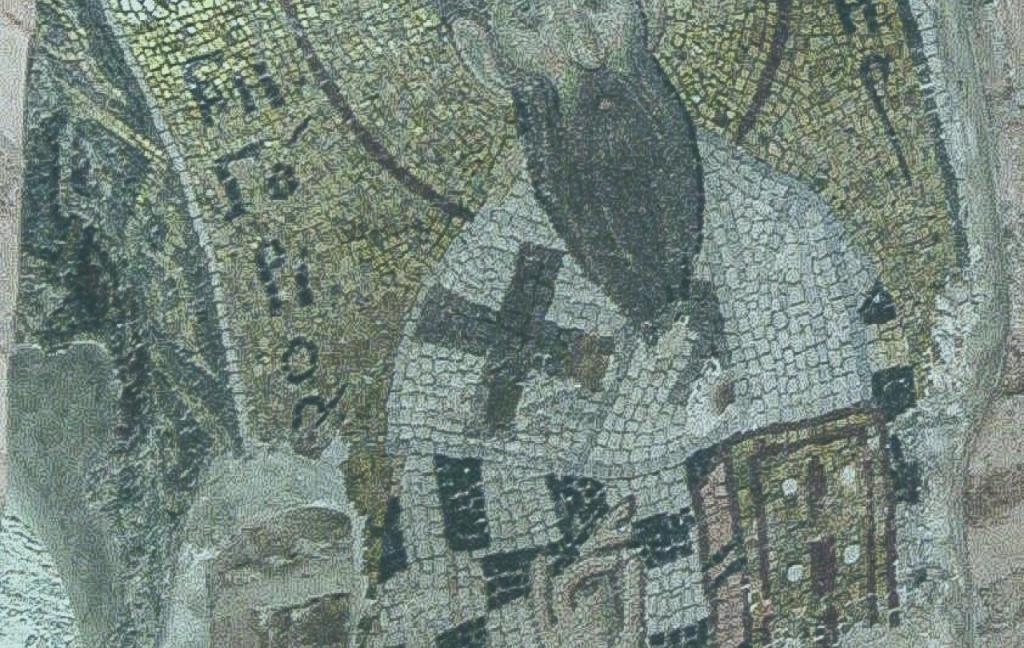
Prominent early Christians like Gregory of Nyssa and Augustine of Hippo condemned slavery, a full milennia before the Christians of Europe would decide not to follow their teachings while creating an international system of dispossession and oppression. Source.
Personally, while I think religion and religious institutions can and have done immense harms to people, I’m not convinced it is the idea of religion that causes harm. If we removed all religion, it doesn’t end bigotry or violence or imperialism or anything else. JD Vance is by all accounts a Christian, but is Trump? Religious institutions should face consequences for their wrongdoings, but God doesn’t only belong to them, or to the conservatives. Belief in religion, in spirituality, is something anyone can and should be able to do – God is in essence, the God of and for everyone, to the extent you believe in that God.
It’s not really my place to tell you what you should or shouldn’t believe in your heart and soul – that’s honestly half the point. It’s not the choice of a pastor or bishop or elder whether or not you “get” to be a part of a faith – they can kick you out of their club, but they can’t control whether you keep believing, and frankly they don’t control what God thinks either (and from all accounts I’ve heard, God much prefers forgiveness to condemnation). We shouldn’t let people who hurt us, or who hates us, decide what we do and don’t belong to or believe. A friend recently pointed out to me the redundancy of the phrase “progressive” or “inclusive” Christian. Christianity is supposed to be those things, and when Christians are doing inclusion and kindness and mercy that’s just normal Christianity. When people put a religion to hate, to bigotry, to domination and violence, that’s the aberration – that’s the unnatural use of faith.
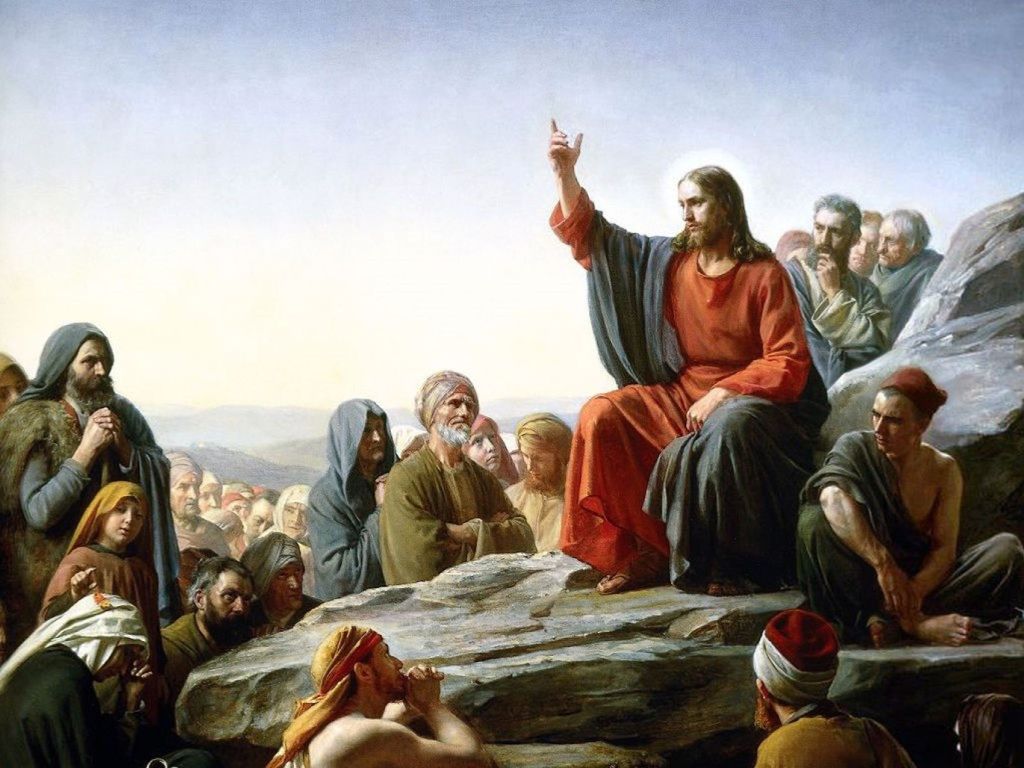
Groups Jesus blessed includes: the poor, the hungry, the mourning, the humble, the peacemakers, the gentle, and those persecuted because they call for justice. But he announced woe to the rich, those obsessed with popularity, and people content with an unjust world. Something to think on. Source.
Who does God belong to? Who gets to claim religion as theirs? At the end of the day, you do, If you want them. And at the very least, these things don’t belong to the conservatives. I’m not interested in their versions of faith and spirituality – I’m much more interested in the originals, the ones that valued life and love and virtue over profit and power. My God proclaimed the end to oppression and prison, abundant life to everyone, and forgiveness to all. That doesn’t sound very conservative to me.
– The Teaspoon

 The Teaspoon Brigade
Leave a reply to impossiblymycb1134303f Cancel reply