A handful of comments that didn’t quite fit into the post on Modern War, which are still useful and interesting in their own right.
The two key components to how I calculated the lethality of different wars was to consider annual death tolls, rather than the raw total loss of life, and to calculate the deaths per capita, rather than as a percentage of the world population. I’d like to elaborate a little on why I think those are two important things to do in this conversation.
So first of all, the annual toll. I think even if some of the calculations I’ve made are shaky (either due to my math, or a shaky population estimate), this is something we should be using more when talking about war. A helpful example of why I think this is the case would be the Reconquista. The Reconquista was the reconquest of what’s now Spain and Portugal by different Christian kingdoms, following an initial conquest by the Berbers of North Africa. This is a medieval conflict, so the estimates involved aren’t precise, but something like seven million died during the Reconquista – using that against a world population estimated at 210 million in 700CE, this would’ve killed 3% or more of the world at the time, a number comparable to the Second World War. What we’re missing though is that the Reconquista wasn’t a single event but an intermittent series of wars that lasted from 722-1492: almost eight hundred years. The ending of the Reconquista is closer to today than it is to its own beginning. Put into this context, seven million killed during the conflict comes out to an average of just over 9,000 people dead a year – in a region whose population ranged from four to six million across the length of the war.
Moving to the calculations of deaths per capita. Something I find problematic in using the “percent of the world population” method is that while it works fine for conflicts that last a few years, it breaks down when looking at large, intergenerational conflicts. Let’s stay with the Reconquista for a little longer. Because the war lasted so long, we can’t easily compare its death toll to the population at its start, because by 800CE everyone alive at the start was dead no matter what happened, and again in 900CE and so on. To actually calculate war deaths against a population, we’d need to compare the number killed to the total of people who’d lived across the length of the war. I want to stress here that I couldn’t give you a fair estimate (I’m not a statistician), but Hispania grew from four million to six million over those eight hundred years, and life expectancy was around 35. If we tentatively said every fifty years the population had fully changed over, then Hispania alone has a population of over 60 million during the Reconquista, Europe a population of at least 375 million, and the world population over 3.1 billion. Against those numbers, the Reconquista killed 0.22% of the world population, down from over 3%. And to stress, I’ve probably undercounted the populations there.
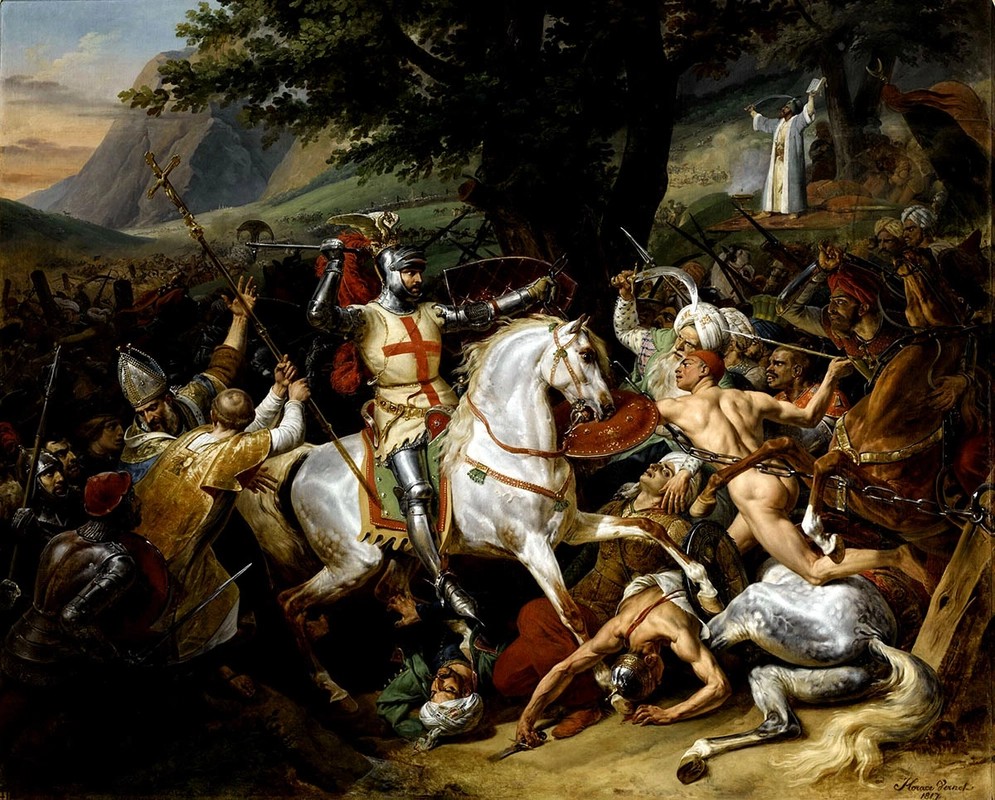
Counting the impact of wars as long as these (practically as long as the medieval period itself) against one single population estimate makes the same mistake as counting the volume and percentage of water lost from a fountain over a period of time, without remembering that water is pumped in too. Source.
Fundamentally, the problem is that the ways we generally calculate war’s lethality don’t work for intergenerational conflicts that last decades and centuries. The annual death toll helps us get a snapshot of a given war, and get around the massive footprint any century-long conflict is likely to generate to see it in context, but to get how ‘deadly’ any number of war deaths is we need some measure of the population. Now you could use global population for measuring all these wars, but I prefer being more precise and using the population of the participants in the wars themselves. My fear is that if we don’t do that, the Mongol conquests or the Punic Wars, or modern conflicts like the World Wars, would appear less deadly simply because another country somewhere else wasn’t involved and living peacefully. Global measures help us understand how many people are exposed to war or experience its hardships, but not how deadly the war is. Something I want to emphasis though is that because population estimates aren’t precise, there is a lot of variance in the final calculations. For several historical wars, I’ve used rough estimates from the mid-points of the conflicts, to try and capture population growth, but I don’t think my method is perfect. For some examples, depending on which date you use for relevant population estimates, the death rate of the Mongol conquests (which killed 40-60 million) is 83-124 (1200CE), 88-131 (1300CE), or 85-127 (1400CE). To make any kind of comparison, we have to work with what we have.
I personally don’t mind this level of variance in the numbers, so long as we remember this is a matter of estimation and speculation. It also helps that the difference is so stark; while most wars of history struggle to hit a death rate over 200, many modern wars do easily. The deadliest modern wars have a rate two or three times higher than the deadliest historical wars. I will note that there are still historical wars with extreme death rates; the First Punic Wars between Rome and Carthage are at 566 and 783, and the Three Kingdom Wars in China have a death rate of 944. These are all wars from antiquity, and part of why I’m hesitant to use them is that the estimations get harder the further back we go. The An Lushan rebellion in China is a good example – sometimes called one of the deadliest wars ever, it lasted from 755-763CE and may have killed over 35 million (according to Steven Pinker). However. That death toll comes from Chinese census data from the time, which doesn’t distinguish between an empty household whose inhabitant are dead, and an empty household whose inhabitants fled the war to somewhere safer. It’s also worth noting that after this rebellion, several provinces were no longer included in the counting system, which would inevitably reduce the number of people counted in the tax census. Another estimate of the death toll puts it at 13 million, and even that might not be right – such is the trouble with historical estimates, especially as we go further back in time. That said, it is probably safe to link up centralised government power (like ancient Rome, imperial China, or modern nation states) with higher death rates than decentralised areas who tend to have smaller armies fighting smaller wars.
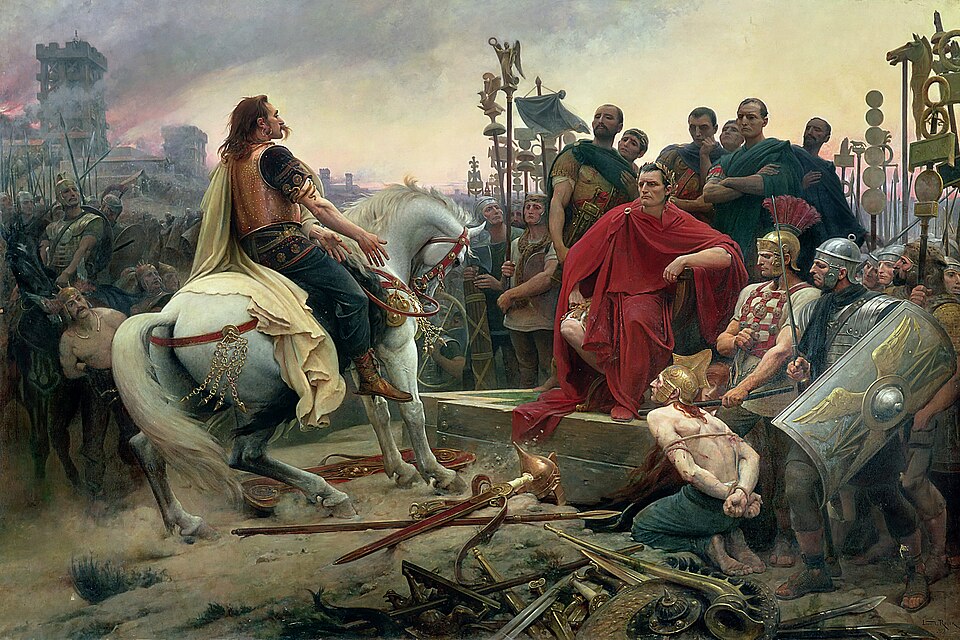
Figures and polities from antiquity, like Julius Caesar and other Roman generals, were particularly liable to exaggerate numbers in battle (for the extra glory). Makes getting any sense of what happened a pain. Picture Source.
I think the most important thing for us to take away from all this is how much narrative and sleight of hand affects our perceptions of war. We say the world is less violent now than the start of the 20th century, and this is true. But it’s also a painfully low standard; the first half of the 20th century was probably the most violent time in human history. If someone had said in 1450CE that because the number being killed by the Black Death was much lower than it was a century ago, humans had overcome issues like disease and plague, they would have been dangerously and horribly wrong, because the plague would come back again and again for centuries, and the discoveries on how to treat it hadn’t been developed yet.
A final thought; it’s often useful to ask yourself why a narrative exists; the stories we tell of our collective society and history are rarely accidental, after all. Who or what benefits from a narrative of a pristine peaceful world? How does that view of the world make you feel, and how does that feeling change if you accept that the world isn’t so peaceful or safe after all? What would have to change to make the world actually peaceful and prosperous for everyone, not just those of us in positions of power and control?
– The Teaspoon


Leave a Reply