Did you see the discourse around the new Odyssey film? When both the trailer and the movie itself got released, there were complaints the film wasn’t “realistic” – mostly (though not exclusivley) because it had black actors in it. And I have to admit – some of the answers people gave to that criticism, they bugged me. I don’t think pointing out the Cyclops, or the Sirens, or the mythic nature of the text is a good answer to this criticism – saying “you want realism in your movie about Sea Monsters” doesn’t cut it for me. And why not?
Because there’s another unrealistic casting we could point out. Because Odysseus and Telemachus are played by an American and an Englishman.
My problem with all this isn’t that I think it is somehow problematic for Helen of Troy to be black – that’s not an issue at all. But in responding by pointing out all the monsters we step over the pure hypocrisy of being angry at “non-Greek” casting except when the actors are white men. Think about it: Africa and the Middle East are geographically and culturally closer to ancient Greece than the UK or the USA! The thing we risk when answering critiques of something being “unrealistic” by pointing ou the fiction of it all is that we’re agreeing on the fundamental point the critic is making. It’s not simply acceptable for the film to have black people because it’s the story is unrealistic or fictional: having black people in the story of Troy isn’t unrealistic to begin with. Especially compared with the unrealism of an American Odysseus. Personally, I am tired of unrealistic casting in our depictions of ancient Greece and Rome. Use actual Mediterranean (and geographically near) actors! Because there’s a political game at play in casting Greece and Rome as white.
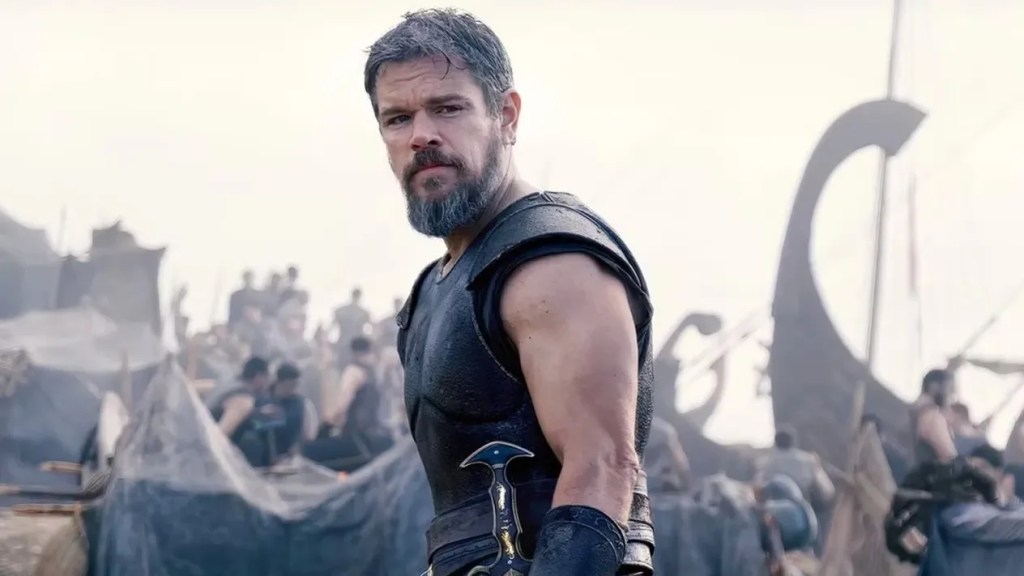
Pictured: Supposedly, a realistic depiction of a Greek man. Nothing to see here, it’s the other roles which were cast unacceptably. Source.
It’s common for people to say “Western History” began with the Greeks, and then the Romans. This is despite the fact that civilisation itself is much older – the Egyptians, Mesopotamians and Chinese all boast realms far older, to name a few examples. Why do we place the origin of the “West” in Greece, when there were already people living to the west of Greece in Britain and Western Europe? Well, probably because much of European history has been chasing the glory and power of the Roman Empire, and the Romans admired and borrowed a great deal from the Greeks. Because to glorify pre-Roman Europe is to glorify the “uncivilised,” and that would really undercut the argument for Empire (not that some haven’t tried).
I know the Odessey is a telling of a mythic story, and it shouldn’t need to be historically accurate. And it doesn’t need to be! But I can’t not think about how this sort of depiction quietly reaffirms the idea of Greeks as “Western” in the political, ideological sense. Imagine if the film had cast people from the Eastern Mediterranean exclusively – and how angry some would be at the “wokeness” of authentically telling Homer’s epic. Just as Jesus is depicted as White again and again to downplay his non-European origin, so too are the old Greeks whitewashed to satisfy audience expectations. And then those same people will be angry at “unrealistic” casting! Because in reality what’s “realistic” is often as much about the things we believe in and our view of society and history, as it is about any facts or statistics.
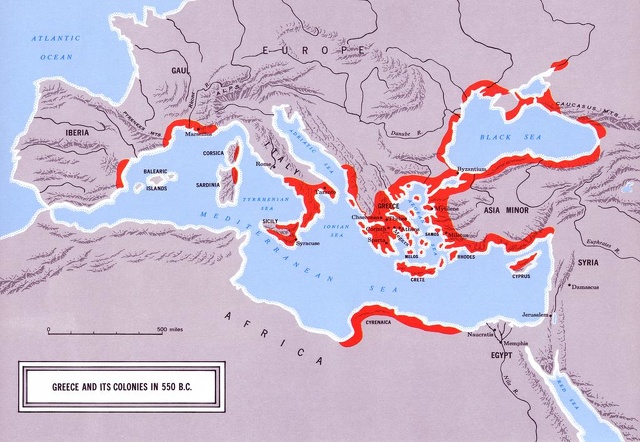
This is a map of Greece & its colonies. Seriously, which is closer: Africa, or several countries out of the frame? Source.
There is no single “realistic” or “accurate” view of the world, one which perfectly captures everything that is true. There are multiple, varied forms meaning that all coexist amongst each other, and whether a particular meaning and being is used mostly depends on its context. An example: do vegetables exist? Well, they’re not a scientific category of food, but that’s only one mode of meaning that ‘vegetables’ has – as a culinary term, “vegetable” has quite a concrete and clear status, even if it emerges partially by negation (a quick definition; vegetables are the plants we eat that we aren’t calling fruit or nuts, usually savoury). Is it “inaccurate” to call a potato a vegetable instead of a tuber? Well, it depends on if you’re a botanist writing a paper, or someone trying to work out what to put in their curry – and honestly, there’s more of the latter than the former in the world. I think it’s very revealing to look at how the premises of realism and accuracy are wielded – we can say quite a bit about a group or community based on which forms of realism they support, and which they don’t.
What does it tell us when someone calls the casting of people of colour “unrealistic,” but not the equally if not more anachronistic casting of white people? Why is it a problem to change the translation or language of Homer now, but not when it was translated from Greek to English? In practice, the latter move was a bigger change to the text than the former. But it doesn’t bother us to see white men as the heroes and leading men, and casting them in these roles reasserts our Myth of the West, that the history of Greece is somehow Western history. And this isn’t the only time we see ‘realism’ papered over some very subjective views. People will praise deeply cynical stories and narratives for their “realism”, as if cynicism is somehow more true than a positive or hopeful view.
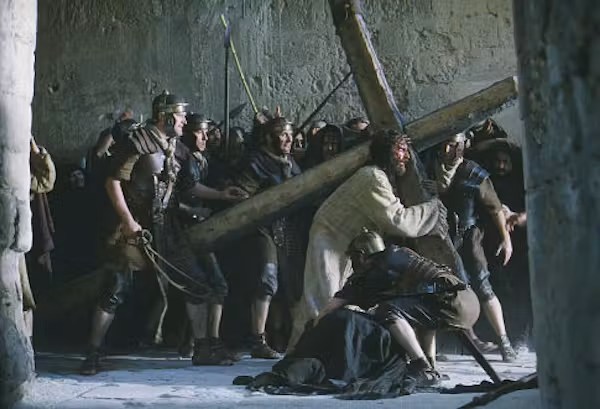
Lets not forget, the Greek heroes aren’t the only historical figures whose complexion is paled in service to a “Western” mythos. Jesus was hardly white, nor his first followers. But still we depict him that way. Source.
You probably don’t need me to tell you this, but just in case: cynicism, disillusion, and bitterness aren’t more true or realistic. It’s not the natural way of the world, it’s an opinion on how the world is which is no more valid than any other.
And that’s why all this conversation about realism bugs me so much. It’s important that we push back on the assumption that people of colour or queer people don’t belong in the histories and stories of Europe – they’ve been around the entire time and it’s not strange for them to be in our art and representation. It’s not realistic to depict the world as irredeemably corrupt, violent, and cruel. We shouldn’t shrug our shoulders at things like this and say “well, it isn’t meant to be realistic, it’s just a movie/TV show/game!” We should remind the critic that their “realism” is more of an opinion than a fact.
– The Teaspoon


Leave a Reply